
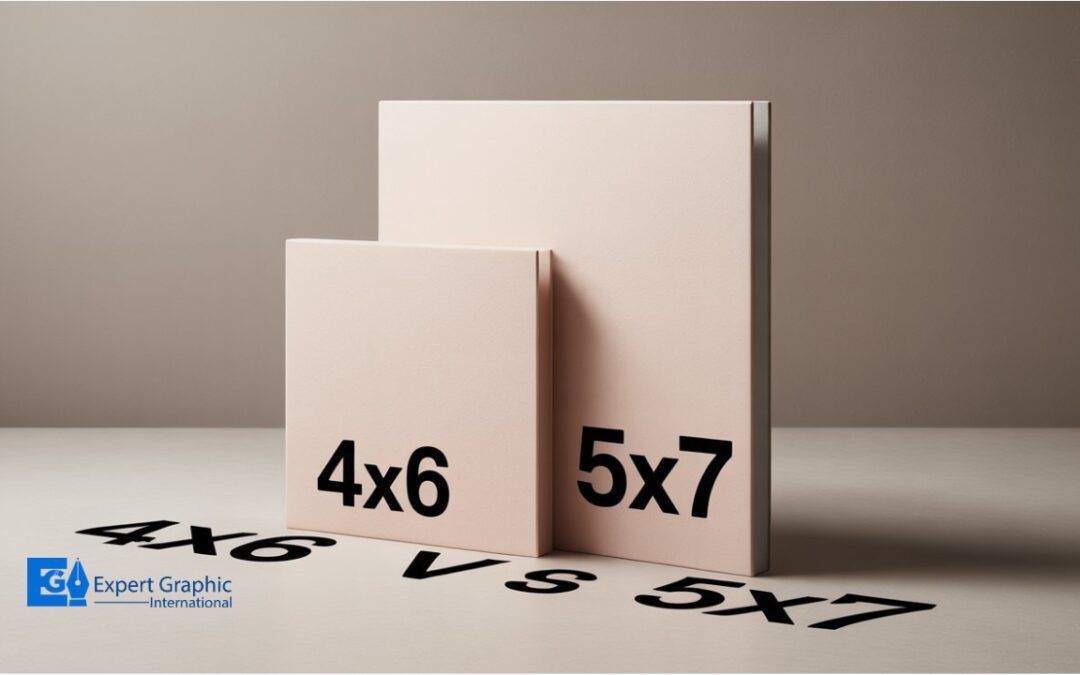
A 4×6 photo measures 4 inches by 6 inches (10.16 cm × 15.24 cm) with a 2:3 aspect ratio, fitting standard frames easily. A 5×7 photo is larger at 5 inches by 7 inches (12.7 cm × 17.78 cm) with a 5:7 aspect ratio, offering more detail.
The 5×7 size gives you 11 extra square inches compared to 4×6. Key differences include cost (4×6 is cheaper), framing ease (4×6 frames are everywhere), and impact (5×7 pops more on walls). Their aspect ratios differ—4×6 matches most cameras, but printing 5×7 usually means cropping your shot.
Choose 4×6 for wallets, albums, or bulk prints. Pick 5×7 for portraits, gifts, or displays where detail matters. Frames? 4×6 wins for small spaces; 5×7 stands out but needs more room. For postcards, 5×7 grabs eyes better, though 4×6 saves cash.
4×6 photos are budget-friendly and album-ready but lose detail from afar. 5×7 shows off textures and fits frames nicely but costs more and may crop your composition.
Use 4×6 for snapshots, collages, or quick shares. Use 5×7 for framed memories, pro shots, or cards. Most folks stick with 4×6 for home albums—it’s classic, cheap, and slots right in.
Experts say: Photographers love 5×7’s polish, printers call 4×6 economical, and designers pick 5×7 for flair. Your move? Match the size to the moment—tiny treasures in 4×6, showstoppers in 5×7. Print sharp, display smart.
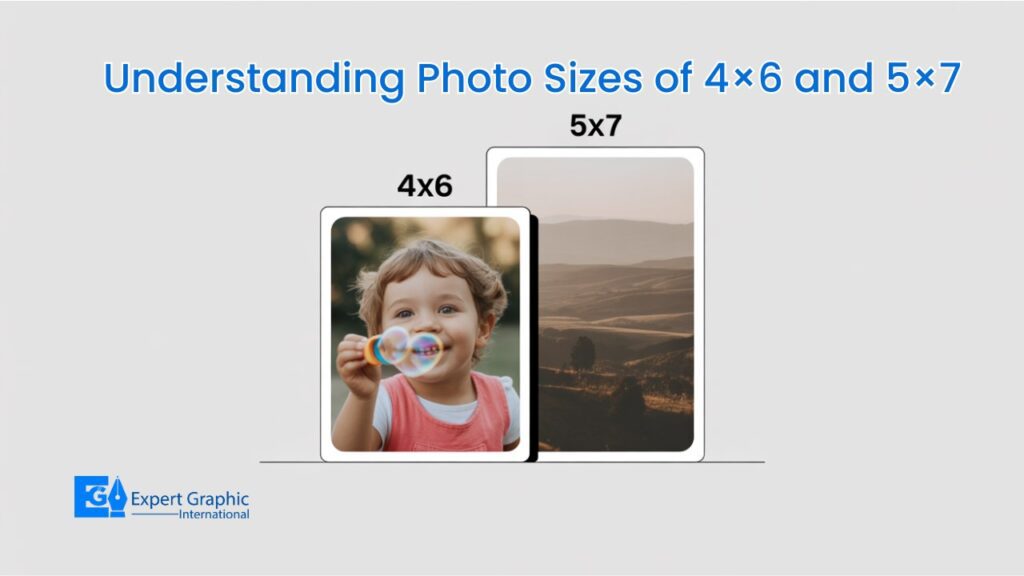
Understanding Photo Sizes of 4×6 and 5×7
How Big is a 4×6 Photo?
A 4×6 photo measures 4 inches wide by 6 inches tall. That’s 10.16 cm by 15.24 cm or 101.6 mm by 152.4 mm. It fits standard frames easily. Its aspect ratio is 2:3.
Size in Inches:
The photo is precisely 4 inches on its shorter side and 6 inches on its longer side. This size is the standard default for many prints and frames. Think of it as slightly shorter than a dollar bill. Its handy dimensions make it perfect for albums or wall displays.
Size in Centimeters & Millimeters:
Converted, the 4-inch width equals 10.16 centimeters (101.6 millimeters). The 6-inch height equals 15.24 centimeters (152.4 millimeters). These metric measurements confirm the same rectangular shape as the inch dimensions. The aspect ratio stays 2:3.
Size in Pixels:
Pixel size depends on resolution. For sharp prints at 300 pixels per inch (PPI), the width needs 1,200 pixels (4 x 300). The height needs 1,800 pixels (6 x 300). Lower PPI means fewer pixels; higher PPI means more. Resolution drives clarity.
Aspect Ratio & Shape:
The 4×6 photo has a 2:3 aspect ratio. This means for every 2 units of width, you get 3 units of height. It creates a rectangular, portrait-style shape. This ratio is classic for photography, matching old 35mm film. It avoids awkward cropping.
How Big is a 5×7 Photo?
A 5×7 photo measures 5 inches wide by 7 inches high. That’s also 12.7 cm by 17.78 cm, 127 mm by 177.8 mm, or 0.42 feet by 0.58 feet. This size offers a bit more space than smaller prints like 4×6.
In inches, the standard photo size is clearly defined as five inches across its shorter side and seven inches down its longer side. This measurement applies whether the picture was taken holding the camera horizontally or vertically; the dimensions themselves stay the same. Knowing these exact inches helps you pick frames or albums.
In centimeters, the conversion uses the rule that one inch equals 2.54 cm. So, five inches become 12.7 cm and seven inches become 17.78 cm. This metric size is super handy for international printing standards or if you typically use centimeters.
In millimeters, an even smaller unit, the photo measures 127 mm by 177.8 mm. Millimeters are spot on for professional printing jobs where extreme precision is a must-have. Studios and tech specs often rely on these exact numbers.
In feet, the size translates to roughly 0.42 feet wide by 0.58 feet high. While feet aren’t the usual way to talk about photo sizes, this conversion can be useful for understanding scale against larger objects or spaces in your home.
In pixels, the size changes based on resolution. For sharp prints (300 PPI), aim for 1500 pixels wide by 2100 pixels high. Standard prints (150 PPI) need 750×1050 pixels. For computer screens (72 PPI), 360×504 pixels works. Choose your pixels based on whether it’s for printing or just viewing online.
How Much Bigger is a 5×7 Than a 4×6?
A 5×7 photo is bigger than a 4×6 photo by 11 square inches. The 5×7 measures 5 inches by 7 inches, giving it a total area of 35 square inches. The 4×6 measures 4 inches by 6 inches, giving it a smaller area of 24 square inches.
The difference in physical size is clear. The 5×7 photo has dimensions of 5 inches wide and 7 inches tall. In contrast, the 4×6 photo is smaller, measuring only 4 inches wide and 6 inches tall. This makes the 5×7 physically larger in both directions.
The difference in total area shows how much more space the 5×7 offers. You calculate the area by multiplying the width and height. So, 5 times 7 equals 35 square inches for the 5×7. The 4 times 6 equals 24 square inches for the 4×6. This means the 5×7 has 11 more square inches of space for your picture than the 4×6.
What Are the Comparison of 4×6 and 5×7 Photo Sizes Across Various Factors?
The 4×6 photo (4″ wide, 6″ high) is smaller, cheaper, and fits albums easily. The 5×7 photo (5″ wide, 7″ high) is larger, shows more detail, and makes a stronger display impact. Both need good resolution for clear prints.
Size and Dimensions: The 4×6 photo measures 4 inches wide and 6 inches high. The 5×7 photo measures 5 inches wide and 7 inches high. This makes the 5×7 noticeably larger in both directions.
Purpose and Common Uses: Choose 4×6 for everyday snapshots, photo albums, wallets, school projects, or sharing lots of pictures cheaply. Pick 5×7 for portraits, artwork, special occasions (like weddings), greeting cards, gifts, or marketing materials where you want more visual punch.
Cost & Budget:4×6 photos are the more budget-friendly option. The cost per print is lower, especially for large quantities. Printing services often offer discounts for this size, making them cost-effective. 5×7 prints cost slightly more but offer a bigger canvas, adding value for display purposes.
Visual Impact and Detail: The bigger 5×7 photo offers a stronger visual impact when displayed. Its larger area lets you see finer details and makes colors pop better, especially good for portraits or artwork you want to show off.
Framing: Finding frames for 4×6 photos is super easy as they’re widely available. Framing a 5×7 can be trickier; you often need to find a specific 5×7 frame, crop your photo, or add a white border to fit a more common frame size.
Composition & Cropping:The 5×7 format offers more freedom in composition. Its bigger canvas is more forgiving with cropping and lets details shine. The 4×6’s compact size may limit composition options, requiring more care with framing. Also, 5×7’s 5:7 ratio often requires cropping from standard camera images, unlike 4×6’s matching 2:3 ratio.
What Is the Difference Between 4×6 and 5×7 Photo Aspect Ratios?
The main difference is their proportions. A 4×6 photo uses a 2:3 aspect ratio, matching most cameras. A 5×7 photo uses a 5:7 (or 7:5) aspect ratio, making it taller and narrower. Printing one size from the other requires cropping.

Aspect Ratio Mechanics:
The aspect ratio describes the width-to-height relationship. Your 4×6 print (4″x6″) has a 2:3 ratio. Your 5×7 print (5″x7″) has a 5:7 ratio. These different ratios mean the shapes don’t match perfectly.
Physical Size Impact:
A 5×7 photo is physically larger than a 4×6 photo. This bigger size offers more space. It helps showcase finer details in your image compared to the smaller 4×6 print.
Cropping Consequence:
Because the ratios differ, you can’t directly swap sizes. Printing a standard 4×6 (2:3 ratio) image as a 5×7 means cropping parts off, usually the long sides. This changes how your original picture looks.
Practical Use Cases:
The common 4×6 size is cheaper and works great for snapshots straight from your camera. The 5×7 size often looks nicer framed and suits portraits better with its larger, taller format. Choose the size based on your photo’s content and how you want it displayed.
Should I Choose 4×6 or 5×7 for Photo Printing or Framing?
Choose 4×6 photos for cost-effective, everyday printing, easy album fitting, and casual displays. Choose 5×7 photos for stronger visual impact, better framing presence, portraits, gifts, or gallery walls, accepting slight extra cost and potential cropping.
Photo Printing Attributes
4×6 Printing: Best for quick, affordable everyday snapshots (pets, travel). Fits standard albums easily. Needs 1200×1800 pixels at 300 DPI. Minimal cropping usually needed.
5×7 Printing: Ideal for special portraits or moments needing more detail. Requires 1500×2100 pixels at 300 DPI. Expect slight cropping due to its different aspect ratio versus 4×6. Costs a bit more per print.
Framing & Display Attributes
4×6 Framing: Fits small frames perfectly for end tables or grouped displays. Affordable for bulk framing but offers fewer style choices. Works well in multi-photo frames without overpowering a space.
5×7 Framing: Creates a standout focal point on walls or desks. Offers wider frame choices and adds visual weight. Ideal for single frames, pairs, or storytelling galleries. Fits standard frames well and suits coffee tables or layered displays better than 4×6.
4×6 vs 5×7 Frame – Which Is Better for Displaying Photos?
Neither frame size is universally “better” for displaying photos. The 4×6 frame is cheaper, fits easily in small spaces and albums, and uses widely available frames. The 5×7 frame creates a bigger visual impact, shows more photo detail, and stands out better on walls, but costs more and needs more display space.
Display Goals & Photo Impact:
Think about why you’re showing the photo. A 4×6 frame works great for everyday snapshots in albums or simple displays; it’s practical but less eye-catching. Choose a 5×7 frame if you want the photo to grab attention, like for a special gift or a focal point on your wall. Its larger size makes details pop and gives the image more presence.
Practical Considerations:
Consider your space and budget. The 4×6 frame is super compact, fits almost anywhere (like shelves or tight walls), and is the most affordable option, especially for multiple prints. The 5×7 frame needs a bit more room to look right and costs a little more per print and frame. Also, finding a 5×7 frame might be trickier than finding a super common 4×6 frame.
Special Uses & Compromises:
For mailing photos or quick phone pic prints, the 4×6 size is usually simplest. For pro shots, portraits (thanks to its shape), or framing a cherished family moment, the 5×7 often looks nicer. Remember, fitting a 5×7 photo might mean cropping it or adding borders if standard frame sizes are scarce, while 4×6 slides right in.
Best Size for Postcards: 4×6 vs 5×7 – Which One Converts Better?
For better conversions, 5×7 postcards usually win. Their larger size grabs more attention and holds more information like detailed messages and strong calls to action. However, 4×6 postcards are a solid, cost-effective choice, especially for big direct mail campaigns where budget matters most.
Conversion Performance Perspective:
The 5×7 postcard converts better generally. Its bigger space lets you use larger images and stronger calls to action. It stands out more in the mail pile, grabbing eyes easier. This increased visibility helps drive responses.
Cost & Budget Perspective:
The 4×6 postcard is the clear budget winner. It’s cheaper to print and mail, especially in bulk. It qualifies for the lowest USPS First-Class Mail postcard rate. This makes it ideal for reaching a huge audience without breaking the bank.
Design & Content Perspective:
5×7 postcards offer more creative freedom. You get more room for designs and detailed info. 4×6 postcards demand a tight focus – they’re best for quick, punchy messages due to their limited space. Keep it short and impactful here.
Mailing & Logistics Perspective:
4×6 postcards are super mail-friendly, fitting standard slots and qualifying for cheap postcard rates. 5×7 postcards (up to 6×11) usually need higher First-Class Letter rates. Always check USPS rules to avoid surprise costs for your campaign size.
What Are the Advantages and Disadvantages of Using 4×6 Photo Size
4×6 photos offer key advantages like lower cost, easy availability, and simple framing fit, but their small size limits detail visibility from afar and may require cropping your original image. They’re great for albums and close viewing.
Advantages stem from its standard, compact nature. Being the most common size makes 4×6 prints highly affordable, often costing just $0.10-$0.20 each, especially with bulk discounts. You’ll find tons of ready-made frames and pocket photo albums designed specifically for this size, meaning no awkward trimming is usually needed. Its 3:2 aspect ratio often perfectly matches many digital cameras, avoiding unwanted cropping. Plus, their smaller footprint makes 4×6 photos super convenient for storing in boxes, sharing, or slipping into your wallet. They work best viewed up close on desks or shelves.
Disadvantages arise primarily from the smaller dimensions. The compact 4×6 size makes details hard to see clearly from just a few feet away, so they lack impact for larger displays. Photos capturing big scenes like landscapes, architecture, or big group shots often lose their wow factor printed this small. If your phone or camera uses a different aspect ratio (like 4:3 or 1:1 instead of 3:2), you’ll lose parts of your picture along the edges when cropping it to fit the 4×6 print. This size just doesn’t make the bold statement larger prints can for wall art.
What Are the Advantages and Disadvantages of Using 5×7 Photo Size
Advantages and disadvantages of the 5×7 photo size exist. Advantages include showing more detail than smaller prints, fitting easily in frames and albums, working great for portraits and gifts, and costing less than larger sizes. Disadvantages involve needing cropping that cuts off parts of your picture, being too small for big wall displays or distant viewing, sometimes costing more than 4×6 prints, and having frames that can be harder to find.
The advantages of the 5×7 photo size offer real benefits. This size gives you noticeably clearer detail than a 4×6, perfect for capturing a baby’s tiny toes or a flower’s petals. Tons of ready-made frames fit 5×7 photos, letting you display them on desks, shelves, or in albums easily. It’s a popular, affordable choice for portraits, vacation snapshots, gifts, and scrapbooking, holding more visual information without being huge.
The disadvantages of the 5×7 photo size stem mainly from its shape and scale. Its 5:7 aspect ratio forces you to crop pictures taken on most cameras, slicing off edges you might want to keep. While bigger than a 4×6, a 5×7 print is still pretty small; it doesn’t wow across the room like an 8×10 and loses detail in big landscapes or group shots. Finding frames can be trickier than for super-common sizes, and printing each one costs a bit more than a standard 4×6.
Understanding the context helps you decide if 5×7 is right. People love the 5×7 because it hits a sweet spot – big enough for good detail but small enough for albums and tabletops. It shines for portraits, baby photos, and fitting into greeting cards. Just know you’ll likely need to trim your original image, and it won’t dominate a large wall. Weigh the need for easy display against potential lost picture area.
What Are the Ideal Uses for 4×6 Photos
The ideal uses for 4×6 photos are standard prints, framing, postcards, greeting cards, photo albums, scrapbooking, photo collages, and gifting. Their compact size and 3:2 aspect ratio make them perfect for these applications.
Standard Prints are ideal for 4×6 photos because they are common, cost-effective, and capture everyday snapshots, family events, or vacations. You can print multiple copies easily.
Framing is ideal because 4×6 photos fit perfectly into standard frames for desk, tabletop, shelf, or wall displays in small spaces. They make great gifts when framed.
Postcards and Greeting Cards are ideal uses because the size allows space for a message or address on the back. They let you create personalized cards for sharing.
Photo Albums are ideal as most standard albums are designed to hold 4×6 prints. They offer easy organization and preserve cherished memories neatly.
Scrapbooking is ideal because many scrapbooking pages are designed for this size. They’re great for school projects and easy for kids to handle.
Photo Collages are ideal as the compact size lets you fit more photos on a board or wall. You can mix and match frames for a visually appealing display.
Gifting is ideal because 4×6 prints make thoughtful, small gifts for birthdays or anniversaries. They fit easily into standard envelopes as keepsakes.
Casual Sharing is ideal due to being cost-effective and easy to share physically with friends and family. They’re the bread and butter of casual photography.
What Are the Ideal Uses for 5×7 Photos
5×7 photos are ideal for framing (desks, shelves, walls, countertops, mantels, bedside tables), creating greeting cards or custom cards, scrapbooking, displaying event photos (weddings, graduations, parties, corporate events), portraits (individuals, small groups, newborns, babies, pets, corporate), nature and macro photography (flowers, insects, landscapes), product photography (jewelry, food for menus, small objects), gifts, fitting in photo albums, digital photo frames (Aura Mason, Echo Show), educational projects and presentations, client presentations, proofing and portfolio work, postcards/travel, art prints, and tabletop displays.

Framing
This size is a popular choice for framed displays. It provides a polished, refined look for portraits and special photos, fitting nicely on desks, shelves, walls, countertops, mantels, or bedside tables. It offers more detail than smaller sizes like 4×6.
Greeting Cards / Custom Cards
The 5×7 dimensions are perfect for custom greeting cards, gift cards, or invitations. This size adds a personal touch and allows enough space for clear text and attractive design elements, making cards distinct.
Scrapbooking
5×7 photos fit exceptionally well in most scrapbook layouts. They allow you to include detailed images while still leaving ample room for journaling, writing messages, and adding decorative embellishments or other decorations.
Event Photography
This size is excellent for displaying photos from significant events. It captures weddings, graduations, parties, and corporate events well, offering greater detail than smaller prints. It gives these memories a polished appearance.
Portraits
Close-up portraits of individuals or small groups work beautifully as 5×7 prints. They capture fine details without feeling overwhelming. This makes them suitable for portraits of newborns, babies, pets, and professional corporate headshots.
Nature, Macro & Product Shots
5×7 effectively showcases the intricate details in nature photography, like flowers, insects, or landscapes. Similarly, it’s ideal for product shots of small items such as jewelry, cameras, or food, especially useful for restaurant menus.
Photo Albums
Favored for photo albums, the 5×7 size displays significant details clearly without taking up excessive space. Many albums have special sleeves designed specifically to hold this versatile print size.
Digital Photo Frames
The format is optimal for digital picture frames like the Aura Mason, Amazon Echo Show, Google Nest Hub, or Samsung Frame. It ensures image details remain clear and well-presented on these digital displays.
Education & Presentations
This photo size is commonly used in schools for educational projects and multimedia presentations. Its visibility and ease of handling make it practical for student use in academic contexts.
Gifts
A 5×7 photo is a thoughtful, convenient, affordable, and popular gift choice. It’s especially effective when framed or included in a scrapbook layout. People frequently use this size for birthday gifts, wedding favors, baby announcements, or memorial photos.
Versatility is Key
The 5×7 photo hits the sweet spot – big enough for detail, small enough for versatility, making it perfect for preserving and sharing life’s moments everywhere from your desk to a digital frame.
Which One Is the Preferred Size for Home Albums and Printing?
4×6 inches is the hands-down winner for home albums and printing. It’s the most popular, preferred size, praised as classic, versatile, cost-effective, and fitting perfectly in most standard photo albums and frames. Other common sizes exist, like 5×7 inches.
Why 4×6 inches dominates home albums: This size is the undisputed champ for stuffing pictures into albums. The text shouts it fits “well in most albums,” “can easily fit into most photo albums,” and is “perfect for small frames and photo albums.” Album pages (like 13.75 x 16.50”) neatly hold six 4×6 photos. Its compact shape makes album building straightforward.
The cost factor makes 4×6 the budget-friendly pick: Printing and framing 4×6 prints is consistently called “cost-effective” and “cheaper than larger sizes.” If you’re printing lots of memories for your albums, this size keeps your wallet happier without sacrificing quality.
Its versatility seals the deal for everyday use: The text repeatedly tags 4×6 as “versatile,” the “most standard,” and “most popular.” It works “almost anywhere” – albums, small frames, scrapbooks. Plus, its shape (3:2 aspect ratio) matches most phone and camera pics perfectly, meaning no annoying cropping before printing.
While 4×6 rules, bigger sizes offer impact: The 5×7 inch print gets a nod as a solid alternative. It’s “slightly larger,” offers “more detail,” and has a “stronger visual impact.” It’s great for portraits, group shots, or special moments you want to stand out more than a regular snapshot, fitting well in many frames too.
What Factors Should Be Considered When Choosing Between 4×6 and 5×7 Photo Sizes?
Consider your photo’s purpose (display vs. albums), cost (4×6 is cheaper), display space (frames/walls need room), visual impact (5×7 shows more detail), resolution needs (higher pixels for 5×7), and audience (gifts vs. personal use).

Purpose of the Photograph:
Pick 4×6 for everyday snapshots stuffed in albums. Choose 5×7 for portraits or special events hung on walls—it gives photos more presence.
Cost Constraints:
4×6 is wallet-friendly, especially for bulk prints. 5×7 costs more but feels polished for gifts or displays.
Display Space & Framing:
4×6 slides into standard frames/albums anywhere. 5×7 needs bigger walls or frames but offers fancier display options.
Visual Impact & Detail:
4×6 works for casual shots. 5×7’s larger size highlights details, making portraits or scenery pop.
Resolution Requirements:
4×6 needs 1200×1800 pixels for sharpness. 5×7 demands 1500×2100 pixels—more pixels prevent blurry prints.
Audience & Photographer Style:
Gift-givers/pros pick 5×7 for wow-factor. Amateurs grab 4×6 for quick, simple albums.
What Are the Expert Opinions on Choosing Between 4×6 and 5×7 Photo Sizes?
Professional photographers prefer 5×7 for better detail and impact. Printing experts suggest 4×6 is cheaper but call 5×7 more premium for framing. Graphic designers pick 5×7 for creative layouts. Photography instructors recommend 4×6 for beginners learning composition.
Professional Photographers’ Take
Photographers favor the 5×7 size for portraits or landscapes. They stress its larger size showcases details better. The visual impact feels stronger, making shots stand out.
Printing and Framing Experts’ Advice
These pros note 4×6 is common and budget-friendly. Yet 5×7 offers a premium feel and works easier with custom frames. It’s their go-to for special displays.
Graphic Designers’ Perspective
Designers choose 5×7 for flexible layouts. It allows creative freedom the smaller 4×6 can’t match. Think balanced compositions or gallery-worthy presentations.
Photography Instructors’ Guidance
Instructors advise starting with 4×6 prints. Beginners learn framing basics on this smaller, forgiving size. Later, upgrade to 5×7 for polished work.
The Bottom Line
Pick 4×6 for albums, quick snaps, or tight budgets. Choose 5×7 for gifts, pro shots, or wow-factor displays. Your memories deserve the right spotlight—print with purpose!
Conclusion
4×6 photos nail cost-effective everyday printing. They slide right into standard photo albums and small frames. Their 2:3 aspect ratio usually matches your camera shots perfectly, meaning no cropping hassle. Grab 4×6 for sharing stacks of vacation pics or filling up albums affordably.
5×7 photos pack a stronger visual punch. That extra inch in each direction shows off more detail, making portraits and special moments really stand out. While they cost a bit more per print, 5×7 photos look sharp in frames on desks, shelves, or walls. Just know their 5:7 aspect ratio often requires cropping your original image.
Your best pick boils down to what you need. Choose 4×6 for bulk printing, easy albums, and keeping costs low. Go for 5×7 when you want that photo to shine as a gift, a framed display, or for capturing finer details. Both sizes get the job done, just in different ways.
Think about your photo’s purpose before you hit print. Match the size to your plan – albums or walls, budget or impact. Get your memories off the screen and into your hands in the perfect size today!