
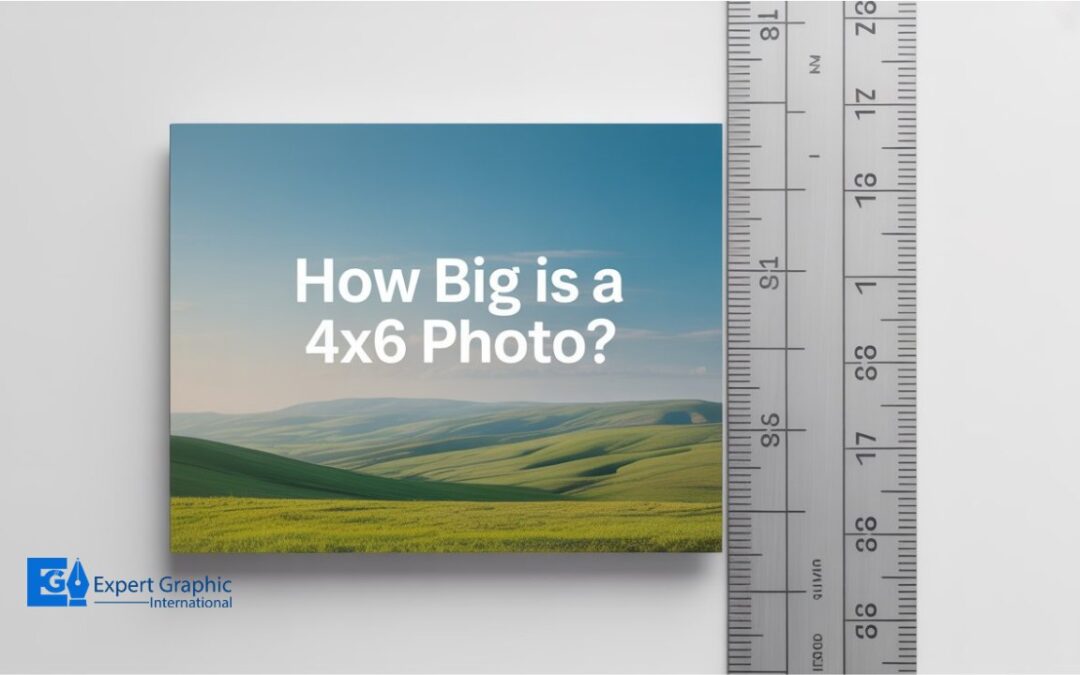
A 4×6 photo is a standard print size measuring 4 inches high by 6 inches wide. Its exact dimensions are crucial for framing and displaying the subject properly. This size originated from the 3:2 aspect ratio of 35mm film and remains the go-to standard for printing.
The 4×6 size offers a practical balance, fitting many uses while being economical. Its key feature is the 2:3 aspect ratio, which matches most DSLR cameras, preventing unwanted cropping.
You’ll find a 4×6 photo measures 4″ x 6″ (10.16 cm x 15.24 cm, 101.6 mm x 152.4 mm, or roughly 0.33 ft x 0.5 ft). Its size in pixels depends on resolution: at 300 PPI, it’s 1200 pixels by 1800 pixels.
The aspect ratio is definitively 3:2 or 2:3, meaning the width is 1.5 times the height – a shape built into many cameras. Compared to other sizes, 4×6 is smaller than a 5×7 or 8×10 but larger than a wallet-sized 3×5.
These photos are super popular because their shape fits camera sensors perfectly, they’re cheap to print, easy to find frames for, and conveniently portable. People use them everywhere: in albums, frames, as gifts, for IDs, passport photos in some countries, and casual snapshots.
Understanding the Basics of the 4×6 Photo Size
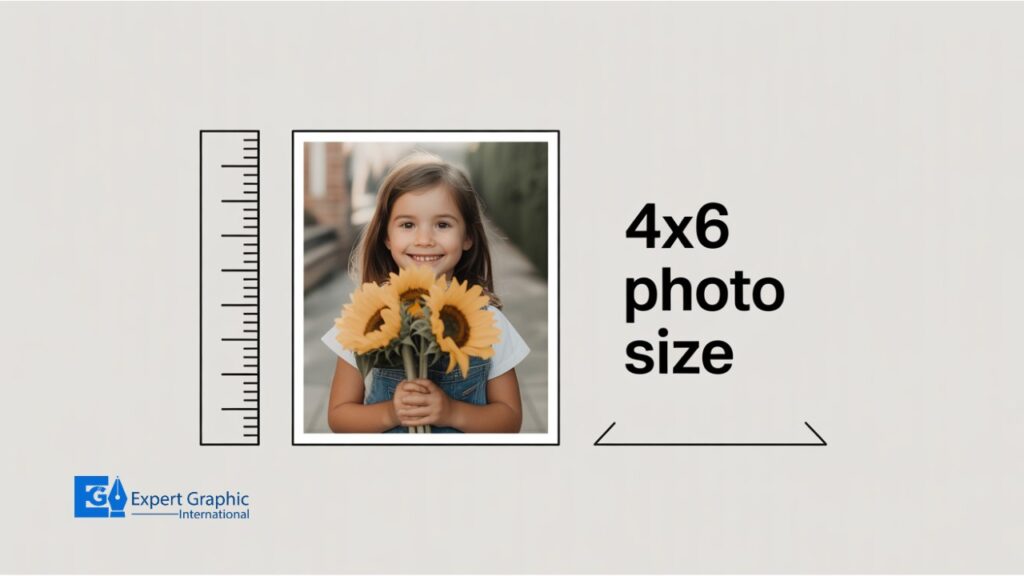
A 4×6 photo refers to a standard photo print size. It measures 4 inches in height (the short edge) and 6 inches in width (the long edge), or about 10cm x 15cm. This size has a standard aspect ratio of 2:3, matching most DSLR cameras. It’s the most commonly used format for personal snapshots, professional photography prints, standard portrait photographs, postcards, and photo albums. Photographers commonly deliver photos in this ratio.
Dimensions and Physical Properties
The exact dimensions are 4 inches by 6 inches. Knowing these dimensions gives you a sense of whether the photo is large enough to display the subject properly and helps plan for mounting and framing the image. A 4×6 picture frame matches these dimensions: 4 inches tall and 6 inches wide.

Origin and Standardization
These dimensions are based on the 3:2 aspect ratio of 35mm film. The photofinishing industry continues to use this size as its go-to standard. It is universally recognized and often the default size for photo printing services. This makes the 4×6 photo a standard for preserving life’s moments.
Practical Uses and Advantages
The 4×6 photo size has different uses, starting from printing to sharing snaps on social media. Its perfect balance between space economy and detail fits various occasions, from casual snapshots to formal keepsakes. Getting images ready for this size allows them to be used for different purposes and easily accessed and organized.
Aspect Ratio Significance
The 4×6 image has a ratio of 2:3. This ratio is the standard that DSLR cameras shoot in. Preserving this ratio ensures photos display correctly without cropping when printed at this standard size or placed in a 4×6 picture frame.
How Big Is a 4×6 Photo in Different Units (In Inches, In Centimeters, In Millimeters and In Feet )?
A standard 4×6 photo measures 4 inches wide by 6 inches high. This converts to 10.16 cm × 15.24 cm, 101.6 mm × 152.4 mm, or 0.33 feet × 0.5 feet. Its aspect ratio is always 2:3.
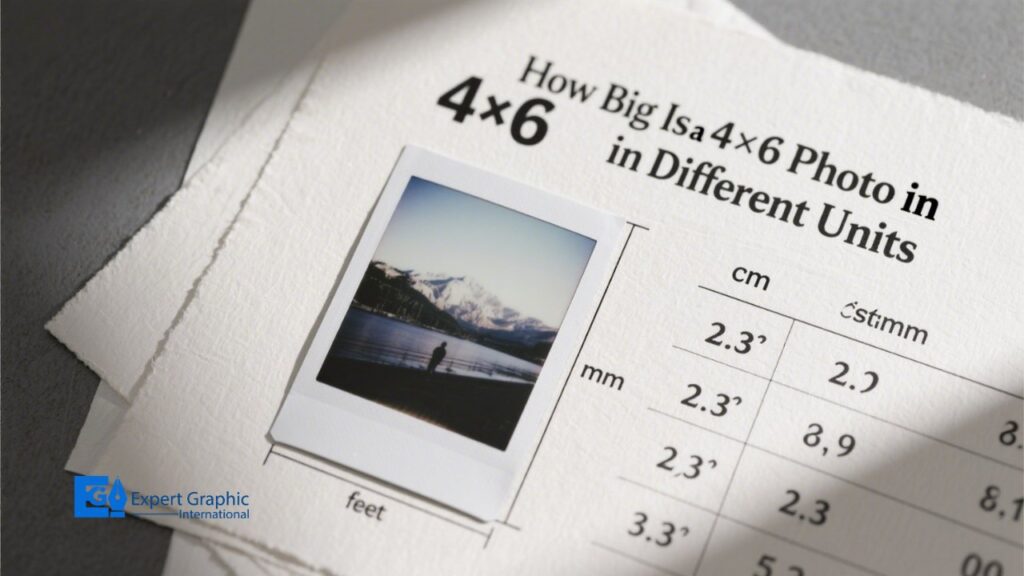
In Inches: The photo’s size is nominally 4 inches wide by 6 inches high. While a precise dimension is sometimes noted as 4 inches by 5 ⅞ inches, this tiny difference is considered negligible for almost all practical uses. It matches the aspect ratio of many digital camera viewfinders.
In Centimeters: Using the conversion factor (1 inch = 2.54 cm), the width calculates to 4 x 2.54 = 10.16 cm and the height to 6 x 2.54 = 15.24 cm. This is the exact metric size, though it’s often roughly called 10 cm x 15 cm depending on orientation.
In Millimeters: Since 1 inch equals 25.4 millimeters, the width is 4 x 25.4 = 101.6 mm and the height is 6 x 25.4 = 152.4 mm. You can also get this by multiplying the centimeter dimensions by 10 (10.16 cm * 10 = 101.6 mm, etc.).
In Feet: Converting inches to feet (1 foot = 12 inches) gives a width of 4 / 12 ≈ 0.33 feet and a height of 6 / 12 = 0.5 feet. Using feet for such a small photo is uncommon, as this unit is typically used for much larger objects like banners; it mainly shows just how compact a 4×6 print really is.
What Size is 4×6 in Pixels?
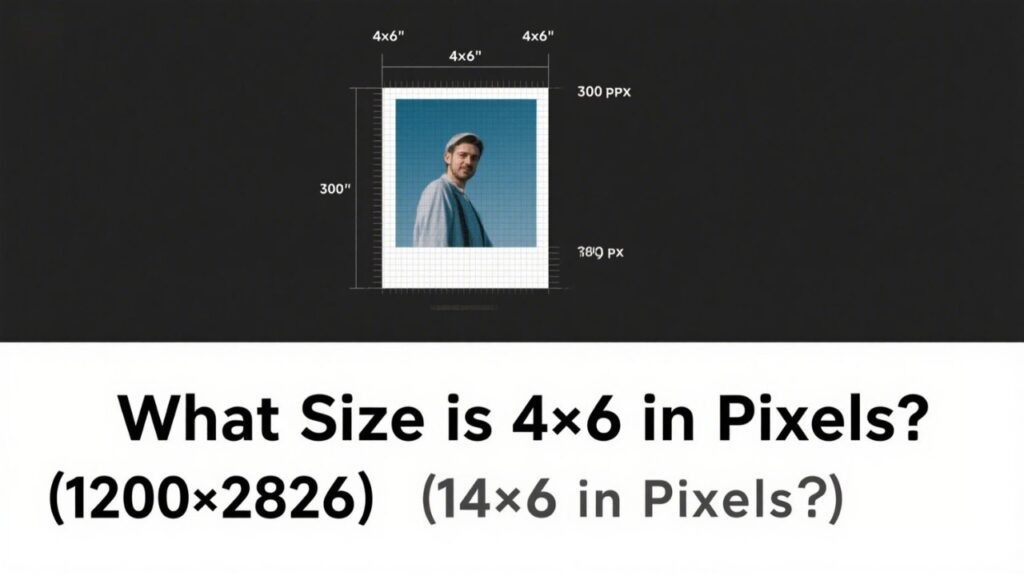
The pixel size of a 4×6 inch photo depends entirely on its resolution (PPI – pixels per inch). At the standard print resolution of 300 PPI, it is 1200 pixels wide by 1800 pixels tall. Other resolutions yield different pixel sizes.
1. Standard High-Quality Print Resolution (300 PPI):
For top-quality physical prints, 300 PPI is the recommended resolution. Using this resolution, multiply the width (4 inches) by 300, resulting in 1200 pixels. Multiply the height (6 inches) by 300, resulting in 1800 pixels. So, 1200 x 1800 pixels is the size.
2. Other Common Resolutions & Their Pixel Sizes:
The pixel dimensions change significantly based on the chosen PPI. Examples include:
200 PPI: 800 pixels (width) x 1200 pixels (height).
180 PPI: 720 pixels x 1080 pixels.
240 PPI: 960 pixels x 1440 pixels.
125 PPI: 500 pixels x 750 pixels.
72 PPI (Web Display): 288 pixels x 432 pixels.
3. Minimum Pixel Requirement for Decent Print:
While higher PPI gives better quality, the minimum pixel size needed for a decent 4×6 print is 480 pixels wide by 640 pixels tall. Using fewer pixels risks a blurry or pixelated photo.
4. Calculating the Pixel Size:
Determine the size in pixels by multiplying each inch dimension by the resolution (PPI). The formula is:
Width in pixels = 4 inches x PPI
Height in pixels = 6 inches x PPI
Choose your PPI based on whether you need a web image (lower PPI) or a high-quality print (higher PPI like 300).
What is the Aspect Ratio of a 4×6 Photo?
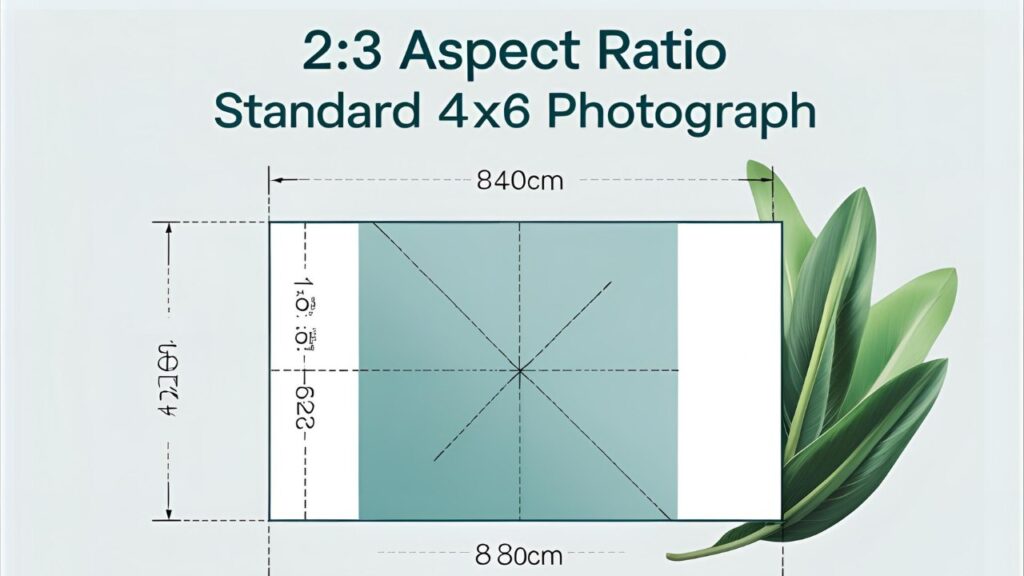
The aspect ratio of a 4×6 photo is 3:2 or equivalently 2:3. This ratio describes the photo’s shape, meaning its width relates to its height proportionally as 3 units to 2 units, or vice versa. It’s a standard shape for prints and many digital cameras.
What Aspect Ratio Means:
Aspect ratio is the technical term for a photo’s shape. It refers to the proportional relationship between the image’s width and its height. Think of it as the recipe for how wide a picture is compared to how tall it is.
How the 4×6 Ratio is Calculated:
For a 4×6 inch photo, the width is 4 inches and the height is 6 inches. Crunch the numbers: divide both 4 and 6 by 2. This gives you 2 and 3. So, the simplest form of the ratio is 2:3. You’ll also see this written as 3:2 – they mean the same proportional shape.
Why 3:2 is Common in Cameras:
Many digital cameras, especially DSLRs and mirrorless cameras, have sensors with a 3:2 aspect ratio. This is the most common sensor shape. Because the camera already “sees” in 3:2, photos taken with it naturally fit perfectly onto 4×6 inch photo paper without needing much cropping.
The Big Advantage for Printing:
The 3:2 aspect ratio of the 4×6 photo matches the 3:2 ratio of full-frame digital cameras. This match is super handy! It means when you print pictures from those cameras onto standard 4×6 photo paper, you usually won’t lose any parts of your picture around the edges. Other sizes like 8×12 or 16×24 also share this same 3:2 ratio.
How Smartphones are Different:
Your smartphone camera likely doesn’t use 3:2. Instead, it probably uses a 4:3 aspect ratio. That means pictures from your phone are shaped slightly differently than a standard 4×6 print. Getting a phone pic perfectly onto 4×6 paper might require some cropping or leave white borders.
Comparing 4X6 to Other Photo Sizes
The 4×6 photo, popular for everyday prints and albums, compares to others like this: The 3×5 is smaller, great for wallets but shows less detail. The 5×7 is larger, offering more space for portraits. The 8×10 is much bigger, ideal for formal wall displays. The 11×14 is largest, making a big visual statement.

3×5 vs 4×6:
The 3×5 photo is smaller and more compact than the 4×6. This smaller size makes it easy to carry and store, perfect for wallets or tiny frames. However, it has less room to show details compared to the standard 4×6 print.
5×7 vs 4×6:
How Big is a 5×7 Photo? Compared to the typical 4×6, it is noticeably larger, providing more space for highlighting details. It is perfect for home décor, art prints, and portraits because of its increased size. A 5×7 photo adds a more noticeable visual presence and fits perfectly in medium-sized frames, particularly in areas where a 4×6 might seem a little too small.
8×10 vs 4×6:
The 8×10 photo is significantly larger, almost twice the size of a 4×6. Its large dimensions allow for much more detail, making it widely used for formal portraits like graduations. This size creates a big impact on walls or in large frames, unlike the smaller everyday 4×6.
11×14 vs 4×6:
The 11×14 is the largest common size, far bigger than 4×6. It’s often chosen for art prints, posters, or large portraits needing a visual highlight. This size draws major attention and requires more space, like in showrooms, where a small 4×6 wouldn’t stand out.
Why Are 4×6 Photos So Popular?
4×6 photos are popular because their 3:2 aspect ratio perfectly matches old 35mm film and most DSLR cameras, ensuring no image loss. This handy size fits standard albums and frames easily. They’re also super affordable, widely available, and offer great detail in a compact, portable package.
Expanded Perspectives:
Perfect Fit for Cameras & Film: The 3:2 aspect ratio of 4×6 prints is identical to classic 35mm film (introduced by Kodak) and most digital DSLRs. This match means the entire picture transfers directly from the camera or film negative to the print with nothing cut off. Photographers naturally deliver photos in this size.
Versatile & Handy Size: The 4×6 inch dimension strikes an ideal balance. It’s compact enough to handle easily and store in bulk, yet big enough to show good detail. This makes it the go-to standard for stuffing into personal photo albums, slipping into ready-made frames, or even building business portfolios. You’ll find tons of frames and albums made just for this size.
Easy on the Wallet & Easy to Find: Printing 4x6s costs less per picture than larger sizes, making them budget-friendly for everyone. Plus, 4×6 photo paper is everywhere – you can grab it online or at any store. It works smoothly with almost any printer, especially popular instant printers, adding to the convenience.
Looks Sharp & Professional: Don’t let the small size fool you. Printed on quality paper (glossy, matte, or luster), 4×6 photos deliver vibrant colors and clear details. They can look seriously professional, good enough for portfolios or exhibitions, while still capturing the feeling of the moment.
Instant Prints & Sharing Magic: This size is the gold standard for instant printers. You get a physical photo seconds after taking the shot – instant gratification! It’s also the perfect size for sharing or gifting. Tuck one into a card, pop it in a small frame as a present, or just hand it to a friend to make memories feel real and personal.
Common Uses of 4×6 Photos?
People commonly use 4×6 photos for framing on desks, shelves, or walls; filling photo albums and scrapbooks; giving as gifts; displaying digitally; taking casual snapshots; and for official needs like ID cards, business displays, and passport photos in specific countries. It’s a classic, handy size.
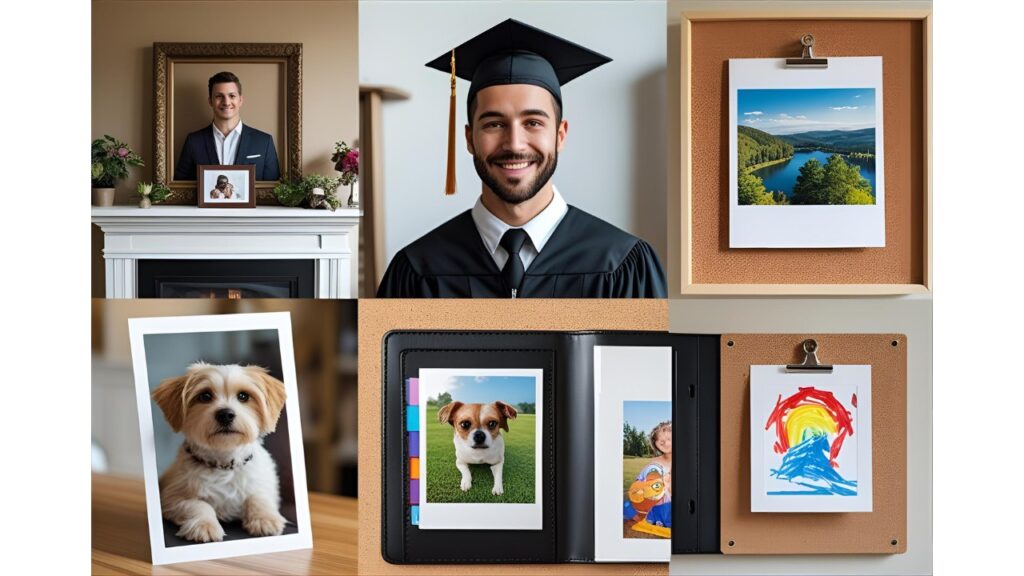
Physical Display & Gifting: Folks love framing 4×6 pics for desks, tabletops, shelves, or small wall spots where you view them up close. They’re perfect for decorating cozy nooks. Plus, slipping one into a frame makes a thoughtful, personal gift for friends or family.
Preserving Memories: This size fits perfectly into tons of photo albums, holding tons of shots. Scrapbook fans also dig 4×6 prints because they’re flexible and let creativity shine when building memory pages.
Practical & Official Needs: Schools and businesses use 4×6 photos for stuff like ID badges, info boards, or ads. Crucially, several countries (like Saudi Arabia, Egypt, UAE, Syria) require this exact size for passport pictures.
Digital & Casual Use: While not always a perfect fit, 4×6 images show up well on most digital screens and social platforms. It’s also the go-to size for everyday prints and fun snapshots because it’s easy to handle and find frames for.
Conclusion
So, a 4×6 photo measures exactly 4 inches by 6 inches. That translates to 10.16 cm by 15.24 cm. Its standard size originated from old 35mm film, keeping that 3:2 aspect ratio alive. This ratio remains the standard shape for most DSLR cameras, meaning your pictures print perfectly without awkward cropping.
This go-to size offers a sweet spot. It’s big enough to see details clearly, yet small enough to handle easily and fit tons of albums or cheap frames. You’ll find it super affordable to print, making it ideal for everyday snapshots, preserving memories, or even official stuff like some passport photos. People use 4×6 prints everywhere – tucked in wallets, displayed on desks, filling scrapbooks, or shared as quick gifts.
Compared to larger sizes like 5×7 or 8×10, the 4×6 is more compact and budget-friendly. It’s smaller than a 5×7 but larger than a wallet-sized 3×5. For sharp prints, aim for at least 1200×1800 pixels at 300 PPI. Remember, its pixel size depends entirely on your chosen resolution.
Ready to use this classic size? Grab your favorite digital shots or recent film scans and get them printed as sharp 4×6 photos today – the perfect, practical way to hold your memories.