

The invention of the video camera has a rich history, starting with the creation of cameras in the early 19th century, evolving through key milestones like Louis Le Prince’s first motion picture camera in 1888 and the Kinetograph in 1891. John Logie Baird and other inventors then pioneered television and video technology, while the 1967 Sony Portapak brought audio into video cameras. From early motion picture devices like Le Prince’s camera to the first consumer camcorders in the 1980s, each innovation expanded the possibilities for everyday use and professional filmmaking. Today, digital cameras and smartphones continue to advance the accessibility of high-quality video recording, further shaping the world of media production. The evolution from film to electronic video cameras has made video capture more portable, affordable, and user-friendly. Whether for personal use or professional production, these developments have forever changed how we record, watch, and share video.
When Were Cameras Invented?
Cameras, or devices used to capture images, were invented over many years. The first known photograph was taken in 1826 by Joseph Nicéphore Niépce. However, the first practical and portable camera, the daguerreotype, was invented in 1839 by Louis Daguerre.
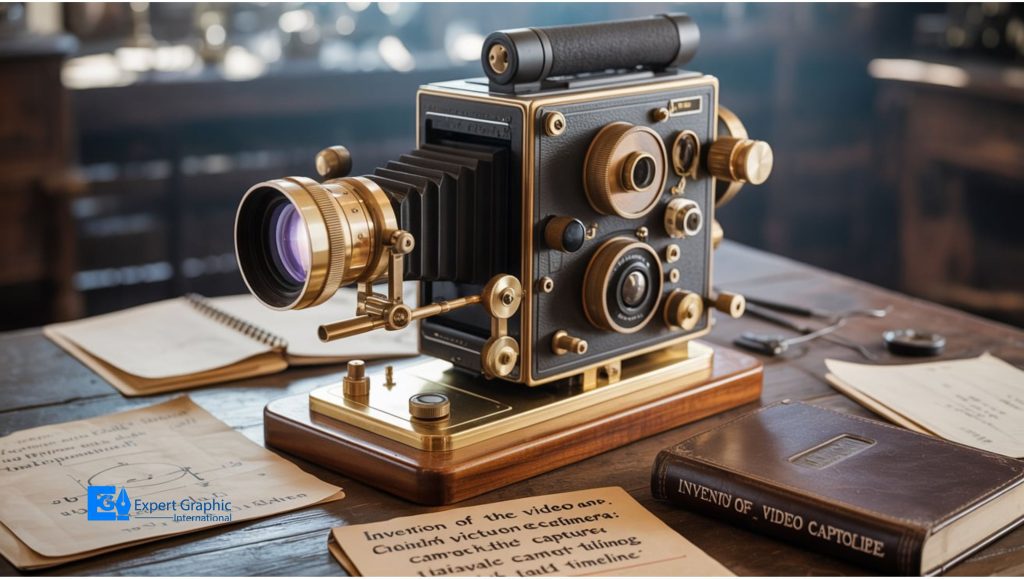
The camera has roots going back centuries, starting with the camera obscura in the 16th century. This early device projected images through a small hole or lens, but it didn’t capture the images permanently. The heliograph, created by Niépce in 1816, marked the start of photographic recording, leading to his famous 1826 photograph, which captured a view from his window.
In 1839, Louis Daguerre made a breakthrough with the daguerreotype, the first usable camera that could capture permanent, detailed images. This device used silver-plated copper sheets to produce the first detailed photographs. This leap in technology paved the way for further innovations in photography.
The timeline of camera inventions continued through the years. In 1841, William Henry Fox Talbot introduced the calotype, allowing for multiple prints from a single negative, which was a significant advancement over the daguerreotype. Later, Frederick Scott Archer improved image quality with the collodion process in 1851, making photographs sharper and more refined.
The Kodak camera, introduced in 1888, revolutionized photography by making it more accessible. It was simple, roll-film-based, and easy to use. This marked the beginning of photography as a mainstream hobby for people everywhere. Then, in 1999, the first DSLR camera was released, pushing photography into the digital age.
Each invention led to new technologies, shaping the way we capture and preserve moments. From the early camera obscura to the modern-day DSLR cameras, each step reflects our growing understanding and appreciation of light, images, and technology.
In the late 20th century, digital cameras began to take over. The first DSLR camera, released in 1999, marked a huge advancement in digital photography, shifting the industry from film to digital technology. These advancements have brought us to the cameras we use today, making photography easier, more accessible, and even more creative.
Each step in the camera’s evolution has paved the way for today’s technology, allowing people everywhere to capture memories, art, and moments. Whether you’re snapping a quick pic or shooting professional-grade photos, understanding this rich history connects us to the art of capturing life.
When was the first video camera created?
The first video camera was created in 1888 by Louis Le Prince, who is credited with developing the first motion picture sequences. His invention used celluloid film to capture moving images, including the historic “Roundhay Garden Scene”.
Louis Le Prince’s invention laid the foundation for video technology. His single-lens camera was a pioneering effort, marking a significant leap in motion picture creation. The Roundhay Garden Scene, which remains the oldest surviving film, was captured using this device.
Following Le Prince’s invention, other inventors pushed the boundaries of video technology. In 1891, William Kennedy Laurie Dickson and Thomas Edison introduced the Kinetograph, a motion picture camera using perforated film to capture moving images.
By 1894, Kazimierz Prószyński contributed to the field with the Pleograph (an early movie camera) and the Aeroscope, a portable, hand-held compressed air camera. These innovations made video recording more accessible and portable, key for expanding the use of video technology.
As the decades passed, video technology saw further breakthroughs, like John Logie Baird’s television system in 1925, which transmitted live moving images. The Iconoscope, invented by Vladimir Zworykin in the 1930s, and Philo Farnsworth’s Image Dissector, further advanced video recording systems.
In the 1950s, Ampex revolutionized video recording with the introduction of the VTR (videotape recorder), enabling television broadcasts to be captured and played back. Each of these innovations played a crucial role in the development of modern video cameras.
Who developed the video camera?
The video camera’s development is attributed to multiple inventors. John Logie Baird demonstrated the first mechanical television system in 1925, while Louis Le Prince created the first motion picture sequences in 1888. Vladimir Zworykin and Philo Farnsworth pioneered electronic video cameras in the 1930s, with Ampex and Sony making pivotal advancements in the 1950s and 1980s, respectively.
Early Contributions
John Logie Baird, a Scottish engineer, demonstrated the first mechanical television system in 1925. His invention involved a device that could capture and transmit moving images, a huge leap forward in video technology. This was one of the first major steps toward modern video cameras.
Motion Pictures and Early Technology
Before Baird’s work, Louis Le Prince made history in 1888 by capturing the first motion picture sequences, which laid the foundation for future video and film technology. These early film developments were essential for the creation of video technology.
Advancing Electronic Television
In the 1930s, Vladimir Zworykin and Philo Farnsworth helped push the video camera into the electronic age. Zworykin’s Iconoscope and Farnsworth’s Image Dissector were crucial innovations that allowed for the transition from mechanical to electronic video recording, a critical shift in video camera technology.
The Videotape Recorder Revolution
In the 1950s, Ampex revolutionized video technology with the introduction of the first videotape recorder. This device allowed for video recording and playback, which was previously not possible. This innovation made video recording more practical and widely accessible, paving the way for future video camera designs.
Consumer Camcorders and Personal Video Recording
By the 1980s, Sony and JVC created the first consumer camcorders, bringing video recording directly into homes. These portable devices combined both a camera and a recording unit, making it easier for individuals to capture personal videos, a huge step toward the personal video recording technology we use today.
As technology advanced, modern video cameras transitioned to solid-state sensors like CCD and CMOS, built on breakthroughs in semiconductor technology and MOSFETs. This shift enabled smaller, lighter, and more efficient cameras, making video recording even more accessible to everyday users.
When was the first video camera with audio introduced?
The first video camera with audio was introduced in 1967, with the release of the Sony Portapak. This portable video camera was a groundbreaking innovation, capable of recording both video and sound, revolutionizing media production.
Before the Sony Portapak, video cameras only recorded silent video. Early devices like the Image Dissector (created by Philo Farnsworth in 1927) and systems by John Logie Baird in the 1920s and 1930s focused on just video. The integration of audio with video recording was a significant leap forward, and the Portapak was the first to achieve this milestone.
The Sony Portapak marked a key moment in history. It made video recording more accessible and portable, helping shift the landscape of media production and broadcasting. This major breakthrough paved the way for modern video technology, which today combines both audio and video seamlessly in a variety of portable devices.
What were the earliest video camera devices?
The earliest video camera devices include Louis Le Prince’s 1888 motion picture camera, William Kennedy Laurie Dickson‘s 1891 Kinetograph, Kazimierz Proszynski‘s 1894 Aeroscope and Pleograph, and John Logie Baird‘s mechanical television system in 1925.
Each of these early video camera devices played a unique role in shaping the technology we use today. Louis Le Prince created the first motion picture camera in 1888, using a single-lens design to record the Roundhay Garden Scene, the world’s oldest surviving motion picture. This early invention laid the foundation for future film and video technologies.
A few years later in 1891, William Kennedy Laurie Dickson, working with Thomas Edison, developed the Kinetograph, an early motion picture camera that recorded moving images on 25 mm film. This was a significant advancement, turning still photography into the medium for capturing continuous motion, a key step toward modern cinema and video technology.
In 1894, Kazimierz Proszynski introduced the Aeroscope and the Pleograph. The Aeroscope was the first handheld compressed air camera, making it easier to film on location, particularly for news and war footage. His Pleograph, which combined a movie camera and projector, allowed for the projection of moving images in real-time.
By 1925, John Logie Baird built the first mechanical television system. This system laid the groundwork for early video cameras, enabling the transmission of moving images. Baird’s work with video cameras helped make live television broadcasting possible, a crucial development for modern video communication.
Together, these pioneering devices paved the way for today’s video camera technology by turning motion pictures and live transmission into an accessible reality, forever changing how we record and experience video.
What were the first video cameras for personal use?
The first personal video cameras, or consumer camcorders, debuted in the early 1980s. These pioneering devices combined a video camera and a videocassette recorder (VCR) into a single, portable unit, making video recording accessible to the general public. Key early models include:
- Sony Betamovie BMC-100P (1983): This was the first true consumer camcorder, using Betamax tapes. Although designed for personal use, its shoulder-mounted design made it less convenient for one-handed operation.
- JVC VHS-C Camcorder (1983): Released alongside the Betamovie, this camcorder used a smaller VHS-C tape format, which could be played back on standard VHS players, offering greater ease of use.
- Kodak 8mm Camcorders (1984) and Sony Video8 Camcorders (1985): These camcorders used compact 8mm video formats, which made the devices smaller and more portable, perfect for personal video recording.
- Full-Size VHS Camcorders (Mid-1980s): Companies like Panasonic, RCA, and Hitachi produced larger, shoulder-mounted VHS camcorders. These were favored by serious videographers and small studios for their longer recording times, a major selling point at the time.
These early camcorders were instrumental in bringing video recording to the masses, allowing people to capture home movies and personal footage for the first time.
Context Reinforcement
The journey of personal video cameras began with the Sony Betamovie BMC-100P in 1983, which marked the birth of consumer camcorders. These integrated both the video camera and videocassette recorder into one portable device, making it possible for individuals to record video at home. This was a major breakthrough, as previous technology required separate devices for recording and playback. In the early 1980s, Betamax and VHS were competing formats, with Betamax offering better picture quality but shorter recording times. Despite some initial drawbacks, the Betamovie BMC-100P is regarded as the first true consumer camcorder, paving the way for the personal video camera industry.
The JVC VHS-C camcorder and the Kodak Video8 format further advanced the trend of smaller, more portable camcorders, making video recording more accessible and convenient for the average consumer. By the mid-1980s, full-size VHS camcorders remained popular among serious videographers and small studios, thanks to their longer recording durations.
What was the first VHS recording device?
The first VHS recording device was the JVC Victor HR-3300, introduced in Japan on September 9, 1976. It marked the debut of the VHS (Video Home System) VCR and was first sold in Tokyo on October 31, 1976.
This VHS recorder became a game-changer in the world of video technology, offering a more affordable and longer recording time than Betamax, its biggest competitor. It made home video recording possible for the masses, giving families the ability to record TV shows and movies.
In 1977, the first VHS VCR in the United States, the RCA VBT200, was released. This machine was the first to use VHS outside of JVC‘s production. The RCA VBT200 helped solidify VHS as the dominant consumer video format by the late 1970s and throughout the 1980s.
The JVC Victor HR-3300 was a pivotal moment for the home entertainment industry, eventually surpassing Betamax in the VHS vs. Betamax format war. By offering affordable options and more convenient features, VHS became the preferred choice for recording and watching videos.
What was the first digital camera with video capabilities?
The first digital camera with video capabilities was the Ricoh RDC-1, released in 1995. It allowed users to capture still images and short video clips with sound, using the MPEG format. Priced at about $1,500, it was a groundbreaking device in digital photography.
The Ricoh RDC-1 was a pioneer in digital cameras. Prior to its release, most cameras could only capture still images. By adding video recording and audio, it opened the door for future digital cameras to offer more versatile multimedia features. The MPEG video format used by the RDC-1 was a significant step forward in digital video technology, offering consumers the ability to record and store video in a digital format rather than relying on traditional film or tape.
The video resolution on the RDC-1 was 768 x 480 pixels, which was considered decent for the time, but it’s much lower than today’s standards. The camera also had a 64mm (2.5-inch) color LCD screen that displayed images and videos. Despite these features, video length was limited by the memory card’s capacity, a challenge that early digital cameras faced due to smaller storage sizes.
The RDC-1 marked a significant shift in the world of digital photography. It was one of the first to combine still images and video, eliminating the need for analog film or tape. This innovation set the stage for continuous advancements in digital video quality, leading to higher resolution videos, better sound quality, and longer recording times. These improvements eventually led to the development of high-definition digital video in the early 2000s.
How Did the Evolution from Film to Electronic Video Cameras Unfold?
The evolution from film to electronic video cameras was driven by advances in image sensors, including the charge-coupled device (CCD) and complementary metal-oxide-semiconductor (CMOS) sensors. These breakthroughs led to smaller, more versatile cameras, making digital video production more affordable and accessible.
Early Stages: The Role of Film
Initially, film cameras dominated video production. They were large and heavy, needing specific lighting and long processing times. Early filmmakers had to wait days for film development, limiting how quickly they could share footage. These bulky, slow systems were far from ideal for everyday use, especially for amateurs or smaller productions.
The Rise of Electronic Imaging
The introduction of CCD technology in the 1970s and 1980s was a game-changer. These sensors converted light into electrical signals, replacing traditional film. This shift made it possible to record images electronically, allowing for quicker editing and easier storage. As video cameras became smaller, they also became more practical for consumers and professionals alike.
The Handycam and Portability Revolution
In 1985, Sony’s Handycam introduced a camcorder, a combined camera and recorder in one portable unit. This breakthrough drastically changed how people approached video recording. Instead of bulky, stationary systems, now anyone could easily film their surroundings and capture moments in real-time, all in a compact, portable device.
Transition to Digital: The Digital Video Camera Era
The 1980s saw the advent of digital video cameras. These systems replaced analog processes with binary data, making it easier to manipulate and edit video. As digital video technology advanced, cameras became more flexible, offering superior quality and editing capabilities compared to traditional analog systems.
CMOS Sensors and the Improvement in Quality
In the 1990s, CMOS sensors further improved video camera performance. These sensors offered even better image quality and higher resolution than CCDs, while also being more power-efficient. This made cameras lighter and more suitable for extended use, pushing forward the trend of more portable, high-quality video devices.
Decline of Film and Rise of Digital Video
With improvements in digital technology, digital video cameras quickly became more affordable and user-friendly. Features like autofocus, instant review, and easy editing contributed to the decline of film-based systems. The accessibility of digital video opened doors for filmmakers, hobbyists, and even everyday users to explore video creation in ways that were once impossible with film.
Today’s Landscape: High-Resolution Digital Cameras
Today’s digital video cameras rely heavily on CMOS sensors, offering features like 4K and 8K resolution, high frame rates, and advanced image processing. These tools are widely used in both professional filmmaking and everyday consumer video recording, proving how far we’ve come from the early film days.
The shift from film to electronic video cameras has transformed the entire industry, from technical innovations like CCDs and CMOS sensors to consumer-level camcorders. Thanks to these advances, video creation is now accessible to anyone, anywhere.
How has video camera technology evolved over time, from the analog era to the rise of cell phone cameras?
Video camera technology has evolved significantly, transitioning from early mechanical systems like the Nipkow disk in the 1920s, to analog formats like VHS and Betamax, and ultimately to the digital era with HD video and cell phone cameras offering 4K and 8K recording.
In the early stages, mechanical video systems were the first to capture video, notably with devices like the Nipkow disk. These were later replaced by more advanced electronic systems in the 1930s, including camera tubes like the Iconoscope and image dissector, which made television broadcasting possible. The analog era saw VHS and Betamax tapes become household names, allowing for video recording and playback on videotape recorders.
By the 1970s and 1980s, consumer camcorders emerged, merging the camera and video recorder into one portable unit. This made recording video more accessible and portable, allowing formats like VHS to thrive in homes worldwide. Notably, Sony’s Betamovie and Handycam were key players in this shift, bringing analog video directly to the consumer.
The 1980s and 1990s marked a major change with the advent of digital cameras. The development of solid-state image sensors like CCD and CMOS significantly improved image quality. Meanwhile, digital video compression standards like MPEG made digital video storage and transmission easier and more practical. This digital shift opened the door to more efficient video editing, storage, and broadcasting technologies, fundamentally changing the way video was recorded and consumed.
The early 2000s brought high-definition (HD) video, replacing older standard-definition systems. This jump in image quality allowed filmmakers and content creators to produce visually stunning work, driving the HD revolution in video production. Brands like Sony and Panasonic were at the forefront of this change.
The most recent leap came with the integration of video cameras into smartphones. Beginning in the early 2000s, cell phone cameras evolved rapidly, now offering 4K and even 8K video recording capabilities. These phones also feature advanced image stabilization, AI-powered enhancements, and computational photography, making high-quality video recording accessible to billions. With smartphones, video capture has become more portable, personal, and instantly shareable than ever before.
Each phase in this evolution – from mechanical systems to digital video, and from bulky camcorders to smartphones – highlights a consistent trend: video capture is becoming more accessible, affordable, and user-friendly. The technology has made video production available to nearly everyone, opening up new possibilities for creative expression, communication, and content consumption.
What Led to the Rise of Modern Video Cameras?
The rise of modern video cameras was driven by several key factors: the transition from film to electronic video, the digital revolution, advancements in image stabilization, the integration of high-resolution formats like HD, 4K, and smartphone capabilities. These innovations made video recording more accessible and efficient.
The shift from film to electronic video marked the beginning of modern video cameras. Unlike film-based systems that were expensive and bulky, electronic video cameras, using technologies like CCD (Charge-Coupled Device) and CMOS (Complementary Metal-Oxide-Semiconductor) sensors, allowed for quicker, more accessible video recording without the need for chemical processing.
The digital revolution was another major influence. The development of digital sensors like CCD and CMOS made video recording more affordable and easier to edit, store, and share. This shift also led to the creation of camcorders, combining the camera and recorder into a portable device, making video recording more convenient.
Technological advancements further shaped modern video cameras. Image stabilization technology reduced motion blur, improving video quality. High-definition (HD) video became common, and resolutions like 1080p provided a clearer, sharper picture. As cameras evolved, even higher resolutions like 4K and 8K became standard, offering exceptional visual quality.
The advent of smartphones also revolutionized video recording. With the integration of CMOS sensors into phones, nearly everyone now has a video camera in their pocket. This made video production more democratized, allowing anyone to capture and share content quickly and easily.
In the end, the rise of modern video cameras is a result of advances in sensor technology, digital storage, compression, and miniaturization. As the world embraces higher resolutions and improved features, video cameras continue to shape the way we capture, share, and consume visual content.
What is the main difference between a video camera and a movie camera?
The main difference between a video camera and a movie camera lies in their recording medium, image quality, intended use, and operational complexity. Video cameras record electronically and digitally, while movie cameras, often using film or high-end digital formats, offer greater control and cinematic quality.
Recording Medium
Video cameras record images electronically, capturing and storing them digitally. They evolved from tape formats like VHS to digital media, such as memory cards or hard drives. In contrast, movie cameras traditionally used film but now often utilize digital cinema cameras that record in RAW or other high-quality formats, allowing for significant post-production flexibility.
Image Quality
Video cameras offer a range of image qualities, from standard definition to 4K, but typically have a lower dynamic range and color depth than movie cameras. Movie cameras, on the other hand, provide exceptional image quality, typically above 4K resolution, with superior dynamic range and color depth. These cameras are engineered to create cinematic looks, ideal for professional productions.
Intended Use
Video cameras are versatile, designed for general use in settings like live broadcasts, sports events, and documentaries. They’re built for convenience and ease of use. Movie cameras, however, are specialized for high-end filmmaking, commercials, and scripted TV shows, where creative control and image quality are paramount.
Operational Complexity
Video cameras are typically more user-friendly and portable, with features like auto-focus and built-in recording. Higher-end models may include interchangeable lenses, but they generally require less crew and equipment. Movie cameras demand more complex setups, often requiring a dedicated crew for operations like focus pulling and handling additional equipment such as external monitors and matte boxes.
While video cameras excel in versatility and ease of use, movie cameras deliver unmatched quality and creative control, making them essential for professional filmmakers. Whether you need something simple or cinematic, understanding the differences helps you choose the right tool for the job.
What Was the First Ever Film?
The first ever film is widely considered to be “Roundhay Garden Scene”, filmed by Louis Le Prince on October 14, 1888. It was shot in the garden of Oakwood Grange, in Roundhay, Leeds, England. This silent, two-second film captured continuous motion, making it the earliest surviving film.
Before this, Eadweard Muybridge’s “The Horse in Motion” (1878) was a key step in motion photography. While important, Muybridge’s work involved a sequence of still images rather than continuous motion on film, meaning it doesn’t fit the definition of a “film” as we understand it today.
Le Prince’s “Roundhay Garden Scene” stands out because it used a single-lens camera Le Prince himself invented, capturing real-time, continuous action on paper film stock. This film played a pivotal role in bridging still photography and moving images, marking a foundational moment in cinematic history.
Though there were earlier experiments with motion, Le Prince’s film remains the oldest surviving motion picture and is often celebrated as the first true film. The film was rediscovered after Le Prince’s mysterious disappearance, adding to its mystique and historical importance in the development of cinema.
This film’s significance lies not just in its age but in how it showcased continuous motion—a crucial breakthrough that paved the way for the future of motion pictures. Today, “Roundhay Garden Scene” is a landmark in film history.
What is a video capturing device?
A video capturing device, often called a capture card, is a hardware device that allows a computer or other digital equipment to receive, convert, and process video signals from sources like cameras, gaming consoles, or DVD players. It turns these signals into a digital format for storage, editing, streaming, or display.
The primary function of a video capturing device is to act as a bridge, enabling computers and other devices to interact with external video sources. These sources often cannot connect directly to computers, so the device makes it possible to capture their video signals. For example, when using a gaming console like a PlayStation or Xbox, the device converts video from the console into a format the computer can understand and work with.
A major role of the device is signal conversion. Whether it’s an analog signal from an older VHS tape or a digital feed from a camera, the device changes the signal into a digital format. This conversion makes it easier to store, manipulate, and stream the video. For example, analog signals may be converted to digital to enable better video editing or streaming.
There are two main types of video capturing devices: internal and external. Internal devices, like capture cards, are installed directly inside the computer via PCIe or PCI slots. They offer low latency and are ideal for professional-quality work, such as live streaming or gaming. On the other hand, external devices connect to a computer via USB or HDMI, offering more flexibility and portability, making them great for casual users or on-the-go streaming.
In terms of features, resolution and frame rate are critical for high-quality video capture. Devices capable of handling 4K resolution and high frame rates like 60fps are especially important for gaming or live streaming, where visual clarity and smooth motion are essential. Low latency is another vital feature, particularly for real-time streaming or video conferencing, as it ensures minimal delay between video input and output.
The applications of video capture devices are wide-ranging. They’re commonly used for gaming, where players capture and stream their gameplay from consoles. Video archiving is another key use, allowing users to convert old analog tapes into digital files. In addition, video editing software often integrates with capture devices to bring in external footage for projects.
Finally, video capturing devices continue to evolve. From early 16-bit ISA cards to modern PCIe devices that support Full HD (1080p) and 4K video, technology has greatly improved. These devices now support advanced standards like USB 3 and Thunderbolt, ensuring fast data transfer speeds and better compatibility with today’s equipment. The advancements make it easier than ever for users to capture high-quality video from a variety of sources.
What are the Types of Video Cameras?
There are several types of video cameras designed to meet different needs, including compact cameras, DSLRs, mirrorless cameras, cinema cameras, camcorders, action cameras, 360 cameras, medium format cameras, and traditional film cameras. Each serves a unique purpose based on features like portability, image quality, and flexibility.
Compact cameras are small and easy to use, making them ideal for casual recording. These point-and-shoot cameras are convenient for everyday moments and travel. While not as feature-rich as professional options, they deliver simple, straightforward performance.
DSLRs provide high-quality video with interchangeable lenses, manual controls, and superior image quality. Popular with both professionals and enthusiasts, these cameras combine the benefits of optical viewfinders with great video and photography performance, making them versatile for many users.
Mirrorless cameras have the same interchangeable lenses as DSLRs but without the mirror mechanism, making them more compact and lighter. Their electronic viewfinders allow for real-time exposure adjustments, providing excellent flexibility and performance in both video and photo content.
Cinema cameras are designed for high-end filmmaking and production, offering features like RAW video capture, larger sensors, and extensive customizable options. These cameras are equipped for large-scale projects and often require additional equipment and professionals to fully operate.
Camcorders are all-in-one devices designed for easy filming and long recording sessions. While not offering the high image quality of more advanced cameras, camcorders are practical for events, news broadcasts, or personal use, making them convenient and portable.
Action cameras, such as the GoPro, are designed for extreme conditions. They are small, rugged, and built to withstand water, shock, and other elements, making them perfect for sports or outdoor adventures. With wide-angle lenses, they capture high-action footage effortlessly.
360 cameras record immersive, spherical video, covering every angle at once. These cameras are commonly used for virtual reality (VR) experiences or interactive content, allowing viewers to engage with the scene from all directions.
Medium format cameras offer superior image quality with larger sensors than full-frame cameras. They are typically used in high-end content creation, especially in the cinema and photography industries, where detail and tonal range are crucial.
Traditional film cameras, though mostly replaced by digital technology, are still prized for their unique aesthetic and organic image quality. They require more skill to use, and the costs of film and development are higher, but many creators value the distinctive feel they provide.
Each type of camera is designed to suit a specific purpose, whether it’s capturing quick memories, making a professional movie, or filming high-intensity action. Picking the right one depends on your needs and the kind of video you want to create.
Conclusion
The history of the video camera has unfolded over centuries, from early inventions like Louis Le Prince’s 1888 motion picture camera to the rise of digital cameras and smartphones today. Along the way, many key inventions and improvements, like the Kinetograph and Sony’s Handycam, have shaped the way we capture and share video. Whether through early motion pictures, consumer camcorders, or modern high-definition video, technology has made video recording more accessible and user-friendly for everyone.
As video technology continues to advance, personal video cameras, like action cams and 360-degree cameras, are becoming increasingly popular for creating immersive content. These cameras allow people to capture moments in ways that were once unimaginable. The next wave of video recording will likely include even more innovative formats, such as 8K resolution and smartphone-integrated tech.
Understanding the evolution of video cameras gives us a deeper appreciation of how far technology has come. Whether you’re a filmmaker or just someone who loves to capture moments, there’s a video camera out there designed for your needs. Explore your options, and maybe even try a new camera or filming technique today—who knows where your creativity could take you!