

Photo frames are often overlooked, yet they hold powerful value when it comes to preserving and showcasing the most meaningful memories. As someone who has spent over 14 years as a professional photographer and photo editor working with families, business owners and even beauty product brands across cities like Chicago and Atlanta, I understand how essential the right types of photo frames are. They do far more than hold a picture. They guard against dust, moisture, and sunlight damage, while also enhancing the visual presence of your photo and adding a personalized touch to your environment. I remember helping a local salon in New York choose rustic wooden frames for their client gallery wall it completely elevated their space. Whether you are designing a warm home, a polished workspace, or a creative studio wall, selecting the right types of photo frames can define how your photos are perceived. This guide is crafted to help you make confident, informed decisions rooted in practical advice and real results.
Why Photo Frames Are Important
Types of photo frames are not just for decoration. They keep your photos safe. They also make your pictures look better. Picking the right frame helps you save memories and adds beauty to your space.
- Photo Safety: Photo frames help keep your pictures safe from everyday damage like dust, moisture, fingerprints and sunlight. Some high-quality frames even come with special glass or acrylic to reduce fading and keep your memories looking fresh over time.
- Structural Support: Frames provide a solid backing and structure that keeps photographs flat, preventing warping or creasing.
- Aesthetic Enhancement: A well-chosen frame can accentuate the colours, tones and mood of the photo. It guides the viewer’s eye and can turn a simple picture into a striking centerpiece.
- Decor Integration: Frames help tie photographs into the overall décor theme of a room, making them not just personal items but part of your home or office design.
Choosing the right frame ensures that your photos are preserved with care. While becoming an integral part of your living or working environment.
Common Types of Photo Frames
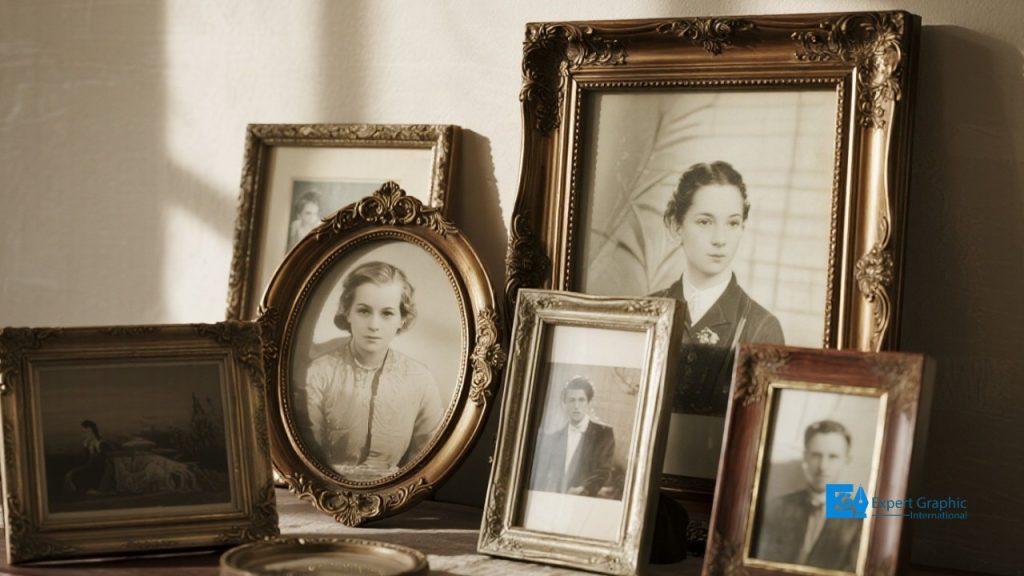
Wooden Photo Frames
Wooden frames are among the most popular and versatile choices available. They offer a warm, natural look and come in various wood types such as oak, walnut, cherry and pine. Each wood species has its unique grain pattern, color and texture, allowing for a broad range of styles from rustic to refined.
Wood frames can be stained, painted or left in their natural state. Their durability makes them suitable for long-term use and they can be custom-carved or embellished to fit a vintage or contemporary aesthetic. Wooden frames often feature wider borders, which help to balance large photographs or artworks.
- Advantages: Wood offers natural warmth and authenticity. It can be refinished or painted to suit evolving décor tastes and withstands everyday wear well.
- Best Uses: Ideal for family portraits, nature photography, vintage prints and traditional artwork. Wood frames add a comforting, homely feel that works beautifully in living rooms, studies and bedrooms.
Metal Picture Frames
Metal frames provide a sleek, modern alternative to wood. Often made of aluminum, stainless steel or brass, they tend to have thinner profiles and minimalist designs. Metal frames can have a brushed, matte, polished or anodized finish, allowing a wide array of aesthetic choices.
They are extremely durable, resistant to warping and lightweight compared to wood, which makes them easier to hang and handle. Their clean lines and subtle shine suit contemporary and industrial interiors perfectly.
- Advantages: Metal frames are sturdy, modern and easy to clean. They maintain their shape over time and can create a striking contrast with colorful or monochromatic photos.
- Best Uses: Perfect for black-and-white photography, abstract art, corporate offices and modern living spaces where simplicity and style are priorities.
Acrylic Photo Frames
Acrylic frames use clear plastic sheets instead of glass, making them lighter and shatterproof. This material also offers UV protection in many cases. Acrylic frames often have a frameless or edge-lit design, giving photos a floating or minimalist look.
Because acrylic is less fragile than glass, these frames are great for environments where safety is a concern, such as children’s rooms or busy public spaces.
- Advantages: Lightweight, shatter-resistant and modern. Acrylic frames are perfect for large displays because they do not add significant weight.
- Best Uses: Casual rooms, modern décor, offices and places where durability without sacrificing clarity is important.
Collage Photo Frames
Collage frames combine multiple photos within one frame, often arranged artistically to tell a story or highlight a theme. They come in numerous layouts, accommodating anywhere from three to over twenty images.
Collage frames allow you to showcase an entire album or collection in a single display, ideal for holidays, family gatherings or travel memories.
- Advantages: Creative, space-efficient and visually engaging. Collage frames encourage storytelling through pictures.
- Best Uses: Family walls, memory boards, themed collections such as weddings or vacations.
Digital Photo Frames
Digital frames use LCD or LED screens to display multiple photos in a slideshow format. Some connect to Wi-Fi, allowing seamless photo updates via cloud storage, social media accounts or mobile apps.
These frames provide dynamic and ever-changing displays, suitable for tech-savvy users who want variety without reprinting photos.
- Advantages: Flexibility to update images easily, can display hundreds or thousands of photos, some models include music and video playback.
- Best Uses: Offices, living rooms, gift ideas and any space where rotating visuals are appreciated.
Wall-Mounted Frames
Wall-mounted frames are designed to be hung on walls, with hooks, wires or brackets for secure placement. They come in all sizes and styles, from small minimalist designs to large, heavily ornate frames.
- Advantages: Saves floor space, allows for eye-level viewing and supports various display arrangements such as grids or gallery walls.
- Best Uses: Living rooms, galleries, hallways, offices.
Tabletop Photo Frames
Tabletop frames include a stand that allows photos to sit upright on flat surfaces such as desks, shelves or bedside tables.
- Advantages: Portable and flexible placement, great for highlighting personal photos or certificates.
- Best Uses: Bedrooms, offices, work desks and side tables.
Modern Photo Frame Designs
Modern frames emphasize clean lines, neutral colors and materials like metal, wood or acrylic blends. They often feature slim profiles or frameless designs to place full focus on the photo itself.
- Advantages: Blend seamlessly into contemporary interiors, emphasize minimalism and sophistication.
- Best Uses: Apartments, offices, art studios, contemporary homes.
Vintage Picture Frames
Vintage frames usually feature intricate detailing, distressed finishes and classic motifs. Often made from carved wood or resin, they evoke nostalgia and add personality.
- Advantages: Unique, rich in character, ideal for creating a sense of history.
- Best Uses: Antique photos, heritage art, eclectic and traditional décor.
Custom Photo Frames
Custom frames are tailored to exact photo dimensions and personal style preferences, providing the perfect fit and finish.
- Advantages: High quality, personalized, perfect for valuable or irregularly sized photos.
- Best Uses: Special family portraits, professional artwork, uncommon photo sizes.
Gallery Wall Frames
Gallery walls display a collection of framed photos or artworks in a curated arrangement. Frames often share a style or color to unify the display, even when photos vary in size.
- Advantages: Creates visual interest, turns multiple photos into a statement feature.
- Best Uses: Large living rooms, hallways, offices, art galleries.
Floating Photo Frames
Floating frames suspend photos between two panes of glass or acrylic, creating a sense of depth and modern elegance.
- Advantages: Adds dimension, highlights the photo uniquely, suitable for both art prints and photographs.
- Best Uses: Professional photography, art displays, modern interiors.
Glass Photo Frames
Glass is traditionally used as the protective cover on frames, but some designs use mostly glass to create sleek, transparent frames.
- Advantages: Clear view, elegant appearance, easy to clean.
- Best Uses: Minimalist interiors, upscale homes, gallery spaces.
Shadow Box Frames
Shadow boxes offer deep frames that accommodate three-dimensional objects along with photos. These are ideal for preserving memorabilia, medals or keepsakes.
- Advantages: Protects and showcases 3D objects, versatile display options.
- Best Uses: Keepsakes, awards, heirlooms, special collections.
Ornate Picture Frames
Ornate frames are highly decorative with detailed carvings, gilded finishes or baroque designs, making bold statements.
- Advantages: Adds grandeur, serves as focal points.
- Best Uses: Formal portraits, classical artwork, luxurious interiors.
Minimalist Frames
Minimalist frames reduce framing to its essentials, often with narrow or invisible borders and neutral colors.
- Advantages: Focuses attention on the photo, versatile with most décor styles.
- Best Uses: Contemporary homes, art galleries, professional studios.
How to Choose the Perfect Photo Frame
Selecting the perfect photo frame requires considering multiple factors to ensure both the photo and the frame complement each other and their environment.
Match Frame to Photo Style and Colors
Assess the photo’s colors, tones and overall style. For example, warm tones pair beautifully with wood frames, while monochrome photos often look striking with metal or black frames. The frame should enhance, not overshadow, the image.
Consider the Room Décor and Theme
Frames should harmonize with the room’s design style and color palette. Rustic rooms benefit from wood or distressed frames, whereas sleek metal or acrylic frames fit contemporary interiors. Using frames as accents can reinforce the décor’s character.
Determine Purpose and Protection Needs
If photos are valuable or sentimental, select frames with UV-protective glazing and durable construction. For casual or frequently updated displays, collage or digital frames offer convenience and flexibility.
Evaluate Size, Shape and Scale
Oversized photos may need wide or elaborate frames to balance proportions. Smaller photos work well with slim frames or matting. Irregular shapes often require custom framing.
Budget Considerations
Custom frames provide premium fit and style but are more expensive. Mass-produced wooden or metal frames offer affordability without compromising on quality or aesthetics.
Frame Materials: Benefits and Considerations
| Material | Benefits | Considerations |
| Wood | Warmth, durability, classic look | Can warp or chip with humidity |
| Metal | Sleek, lightweight, modern | Can scratch, cooler feel |
| Acrylic | Light, shatterproof, modern | Scratches easily, less classic |
| Glass | Clear, elegant, protective | Fragile, heavier |
Trending Innovations in Photo Frames
- Eco-Friendly Frames: Made from reclaimed wood or recycled metals, supporting sustainability.
- Mixed Media Frames: Combining materials like metal and wood for unique texture and style.
- Personalized Frames: Engraving or embossing names, dates or messages.
- Smart Frames: Incorporating Wi-Fi and cloud connectivity for dynamic photo displays.
Caring for Your Photo Frames
- Use soft, lint-free cloths for cleaning glass or acrylic surfaces.
- Avoid harsh chemicals to prevent damage to finishes.
- Keep frames out of direct sunlight to reduce fading.
- Periodically check and tighten mounting hardware to avoid accidents.
- For wooden frames, use appropriate polish or wax to maintain luster.
Frequently Asked Questions (FAQs)
What frame material best protects photos over time?
Wood and metal frames with UV-protective glass or acrylic glazing provide superior long-term protection.
Can I reuse frames for different photos?
Yes. Many frames have easy-open backs for swapping photos. Collage and digital frames offer even greater flexibility.
How should I measure my photo for framing?
Measure the exact height and width of your photo. Consider adding extra space if you plan to include a mat board or border.
Are digital photo frames suitable for all environments?
Generally, digital frames are designed for indoor use only, as they require power and may not be weatherproof.
What frame styles work best in modern homes?
Minimalist metal or mixed-material frames with clean lines complement modern décor perfectly.
Conclusion
Choosing the right types of photo frames can elevate your photographs, protect your memories and enhance your living or workspaces. From classic wooden frames to cutting-edge digital displays, the right frame ties your photo into your personal style and environment. Taking time to consider frame materials, styles and purpose ensures your photos will look their best and remain cherished for years to come.
Start exploring the many framing options today to find the perfect frame that tells your story in the most beautiful way possible.