

A camera captures images by focusing light through a lens onto film or a digital sensor, controlled by aperture and shutter speed. This technology started with the camera obscura, a dark room projecting upside-down images. Joseph Nicéphore Niépce invented the first photographic camera around 1816, using bitumen-coated plates in a process called heliography. Louis Daguerre later created the sharper, more practical daguerreotype. Alexander Wolcott patented the first U.S. camera in 1840, using a mirror to speed up portraits. Richard Maddox and Charles Bennett revolutionized things with gelatin dry plates, making photography portable and faster. Cameras evolved from bulky early designs through roll film, 35mm, SLRs, and Polaroids to today’s DSLRs, mirrorless models, and smartphones. Key milestones include George Eastman’s roll film Kodak, Oskar Barnack’s 35mm Leica, and Steven Sasson’s first digital prototype. The Lumière brothers invented the cinematographic camera in 1895. Today, AI powers everything from autofocus to photo editing. Grab your camera or phone—you’re holding centuries of innovation ready to capture your world.
What is a camera and how does it work?
Camera: a device that captures and records images by focusing light onto a recording medium; core parts include body, lens (optics, focal length), aperture, shutter, image sensor or film, pixels, viewfinder, and memory card for storage—this is how a camera works.
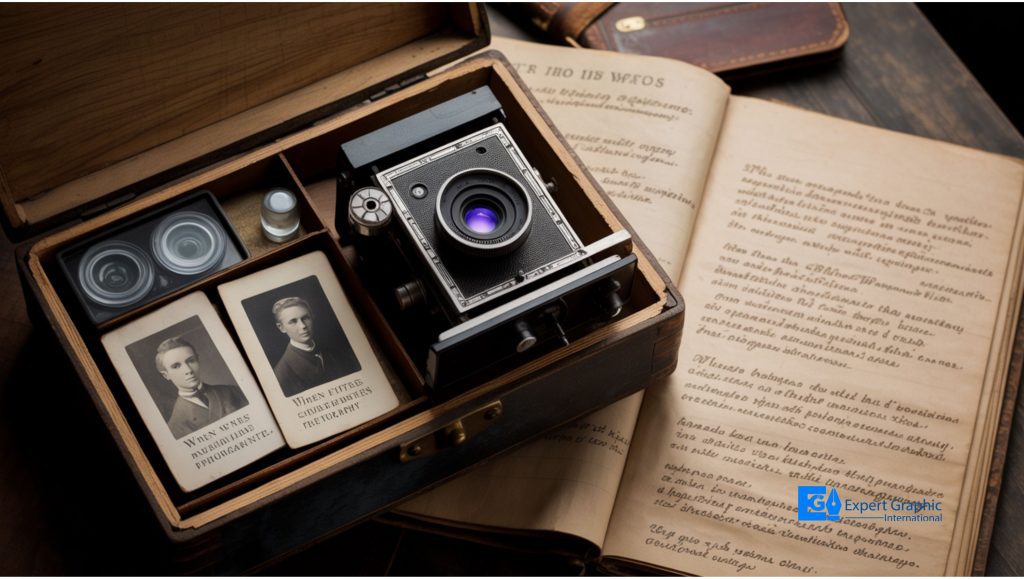
A camera is an instrument used in photography and videography for light capture and image formation on a light-sensitive medium, either film or an electronic image sensor.
The lens is the optical component: a curved glass lens or plastic element that bends rays to form a real image. Lens focus and focal length set angle of view and magnification and control depth of field (depth field).
Aperture control sets light intensity and affects depth of field; shutter speed sets exposure time. A fast shutter speed freezes motion, while a slow speed creates a motion blur effect. Together they form a light regulation system that sets exposure.
In digital cameras an electronic image sensor with millions of pixels and a color filter array converts light into electrical signals, capturing brightness and color information. Digital processing creates files saved to the memory card slot (digital camera storage). In traditional film cameras light causes a chemical reaction film that requires film development.
A camera works by letting light reflect off the subject, enter the lens, and be focused onto the recording medium. The aperture adjusts how much light passes and the shutter controls how long (shutter speed); then the sensor or film records the image.
Common camera types include DSLR, mirrorless, compact, and traditional film cameras. Every model shares core parts: body, lens, aperture, shutter, image sensor or film, viewfinder, and a memory card slot for storage.
Image quality and results depend on light, subject, optics, aperture, time (shutter speed), and the recording medium. Change any of these and you change exposure, image formation, depth field, and how motion and detail are captured.
Try this quick experiment: pick a subject, change aperture and shutter speed, and swap lenses to watch light capture and image formation in action. Grab your camera and see how light + lens + control equals a photo you made.
What was the early concept that led to the invention of the modern camera?
The early concept that led to the invention of the modern camera was the camera obscura: a dark chamber/pinhole (later lens) projecting an inverted image—known to Mozi, Aristotle, Ibn al-Haytham, Leonardo da Vinci, Johann Zahn, and Niépce.
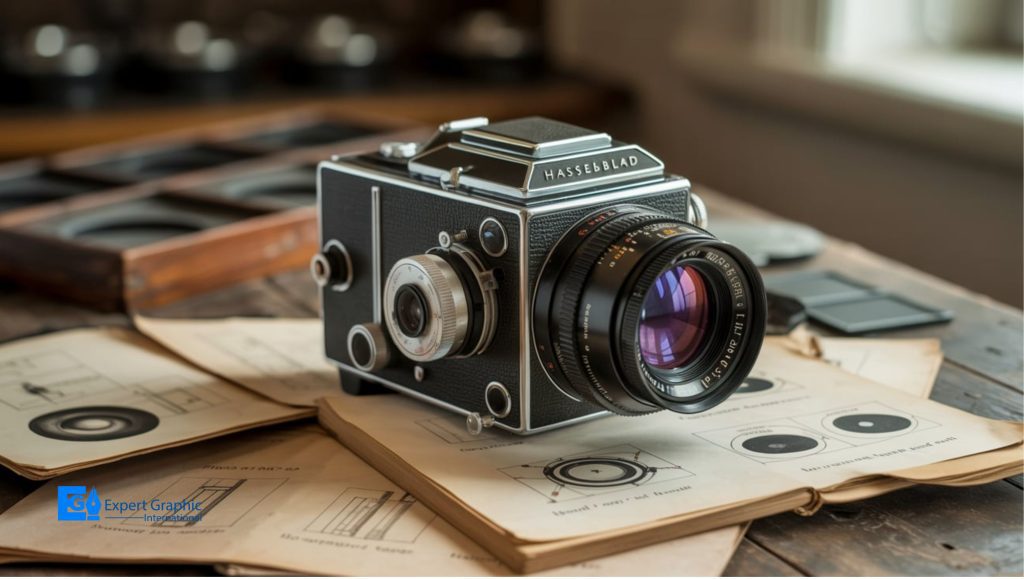
It worked by letting light pass through a pinhole or lens into a dark chamber, projecting an inverted image on the opposite surface; this showed that light travels in straight lines, and Ibn al-Haytham tied focal behavior to the aperture.
Early records and people matter: Mozi noted the effect; Aristotle used pinhole projections for eclipses; Ibn al-Haytham (Alhazen) experimented and gave the first correct optical analysis; Leonardo da Vinci described the device and artists used it for drawing.
How people used it: from about 1550 artists used the camera obscura as a drawing aid and to study perspective; observers used pinhole projection to view solar eclipses safely; by the late 17th century portable box and tent camera obscurae were common for tracing scenes.
How the concept led to photographic invention: Johann Zahn sketched portable camera ideas (1685); Joseph Nicéphore Niépce developed the heliograph (1816) and in 1826 made the first permanent photograph, View from the Window at Le Gras (bitumen-coated plate). Louis Daguerre’s daguerreotype (1839) and Alexander Wolcott’s mirror lens sped exposures.
Evolution into the modern camera: the optical projection idea moved into daguerreotypes, calotypes, dry plates, and film; later electronics changed the game—Steven Sasson (Kodak) built a CCD-based prototype (1975), starting the shift to digital cameras, DSLRs, and camera phones.
What is the history and purpose of the camera obscura?
The history of the camera obscura runs from Mozi (Mo-tzu) and Aristotle through Al-Kindi, Ibn al-Haytham (Alhazen), da Vinci, Giambattista della Porta, Kepler, Johann Zahn to Niépce; its purpose was optics study, artistic drawing aid, safe eclipse viewing, entertainment, and a photography precursor.
History — ancient roots: Mozi and Aristotle observed that a small hole projects an inverted scene; Anthemius of Tralles noted related effects. Medieval scholars like Al-Kindi and Ibn al-Haytham (Alhazen) turned the idea into optical experiments and gave the first geometric analysis.
History — Renaissance to early modern: Leonardo da Vinci recorded clear descriptions in his Codex Atlanticus, and artists such as Michelangelo, Vermeer, and Canaletto used projected images as drawing aids. Giambattista della Porta added lenses; Johannes Kepler named and refined the device; Johann Zahn sketched portable box designs.
Purpose — art and science: Artists used the camera obscura as a drawing aid to get perspective and color right. Scientists used it to study vision and optics. Observers used it to view solar eclipses safely. Later, it became entertainment in public attractions like Maria Theresa Short’s Edinburgh Camera Obscura.
How it works: In a dark chamber or box, light enters a small opening (pinhole) or lens and projects an inverted image on the opposite surface because light travels in straight lines. Lenses and angled mirrors later sharpened and turned the image upright in a portable box or tent camera obscura.
Influence and legacy: Portable camera obscura helped artists trace scenes; archaeo-optics even links Paleolithic keyhole tracing to early art. The projection principle, combined with light-sensitive materials (18th-19th century advances), let J.-N. Niépce and others convert projection into permanent photographs.
Who invented the photographic camera and what process did they use?
Joseph Nicéphore Niépce invented the photographic camera (c.1816) and used heliography: he coated a polished pewter plate with bitumen of Judea, exposed it in a camera obscura for hours or days, then solvent-washed to leave a permanent image.
Niépce’s invention and timeline: Joseph Nicéphore Niépce began experiments by 1816 and is credited with inventing the first photographic camera and the heliograph. His oldest surviving camera-made photograph (c.1826–1827), View from the Window at Le Gras, came from his Saint-Loup-de-Varennes estate. He later partnered with Louis Daguerre (1829) before dying in 1833.
The heliography process, step by step: Niépce dissolved bitumen of Judea in oil of lavender, applied a thin coating to a polished pewter plate, and placed that plate in a camera obscura. Light hardened the bitumen proportionally; after long exposure, he washed away the unhardened bitumen with solvents (oil of lavender and white petroleum), leaving a fixed image.
Camera and exposure details: Niépce used a sliding wooden box camera (made by Charles and Vincent Chevalier) and reported exposures from about eight hours to several days. The Niépce heliograph is the earliest known camera image that survives and later entered collections such as the Harry Ransom Center.
Contemporaries and follow-up processes: Louis Daguerre improved chemical and optical design and announced the daguerreotype (1839) — a silver-coated copper plate developed with mercury vapor and fixed with salt — while William Henry Fox Talbot independently created the paper-based calotype (negative → positive) about 1839–1841. The daguerreotype led to commercial cameras (e.g., Giroux for Daguerre), and later advances (collodion wet plates, roll film, Eastman Kodak) built on these roots.
Who took the first photograph and how was it created?
Joseph Nicéphore Niépce (1826–27) took the first photograph using heliography: he exposed a bitumen-of-Judea–coated polished pewter plate in a camera obscura at Le Gras, then solvent-washed with oil of lavender after long-exposure, creating View from the Window at Le Gras.
Niépce’s background and aim: Joseph Nicéphore Niépce (1765–1833) lived near Chalon-sur-Saône and worked at his Saint-Loup-de-Varennes estate to find a mechanical way to reproduce images instead of tracing them by hand.
The heliography process, step by step: Niépce dissolved bitumen of Judea in oil of lavender and coated a polished pewter plate. He placed the plate in a camera obscura, exposed it to sunlight for a long period, and then removed unhardened bitumen by washing with oil of lavender and white petroleum solvent to fix the image.
Camera and exposure details: Niépce used a sliding wooden box camera made by Charles and Vincent Chevalier and aimed it from a second-story window at Le Gras. Exposures were very long—traditionally about eight hours but possibly several days—because heliography required steady sunlight.
The surviving result and custody: The image View from the Window at Le Gras is the world’s earliest surviving camera-made photograph. Niépce’s heliographs passed through private collections and the Niépce Heliograph entered the Harry Ransom Center; historians like Helmut Gernsheim helped restore Niépce’s place in history.
Contemporaries and what followed: Niépce partnered with Louis-Jacques-Mandé Daguerre in 1829; after Niépce’s death Daguerre developed the daguerreotype (silvered copper plate, mercury vapor development) and announced it in 1839. William Henry Fox Talbot independently developed the calotype negative→positive process in England.
Legacy and significance: Niépce’s heliography turned camera projection into a permanent image and directly led to faster, higher-contrast methods (daguerreotype, calotype, collodion wet plate), roll film, and eventually digital capture—changing how we record and share the world.
What was Louis Daguerre’s contribution to photography?
Louis Daguerre invented the daguerreotype (announced 1839): he used an iodized silver-plated copper plate exposed in a camera, developed with mercury vapor, fixed with salt/hypo, cut exposure times, partnered with Niépce, and the French government made it public.
Daguerre’s chemical process: he sensitized a highly polished silver-plated copper sheet with iodine (forming light-sensitive silver iodide), exposed it in a camera to form a latent image, then developed the faint image with mercury vapor and fixed it with a salt solution (later hypo).
Technical impact on exposure and image quality: Daguerre’s method produced very sharp, one-of-a-kind metal images with far greater detail than earlier attempts. Early exposures lasted minutes to tens of minutes; later chemical tweaks (bromine/chlorine additions) and better lenses cut exposure times to seconds.
Commercialization and public release: Daguerre partnered with Nicéphore Niépce (from 1829) and continued work after Niépce’s death (1833). In 1839 François Arago announced the daguerreotype to the Académie, and the French government bought the rights and published the process “free to the world,” granting pensions to Daguerre and Niépce’s heir.
Cameras, lenses, and manufacture: early daguerreotype cameras were sliding-box designs. Alphonse Giroux made the first commercial daguerreotype camera (1839) with a Chevalier lens. Later makers added mirrors, prisms, faster lenses (Petzval designs), and shutters to improve framing and reduce exposure.
Cultural and scientific effects: the daguerreotype made portraiture and accurate visual records widely accessible, aided scientific study (micro/telescopic images), and launched commercial studios and printed reproductions via engraving or lithography. Its unique, mirror-like images shaped 19th-century visual culture.
Legacy and succession: Daguerre’s daguerreotype marked photography’s practical birth and spurred rival processes—Talbot’s calotype (negative→positive) and later collodion wet plates, roll film, and, eventually, modern photographic systems. Daguerre bridged art, theatre, and chemistry to create a workable photographic art.
What did Alexander Wolcott contribute to early camera technology?
Alexander Wolcott patented the first U.S. camera (1840), replacing the lens with a concave mirror to collect more light, cutting daguerreotype exposure from 30 minutes to 5 minutes, improving plates with bromide/chloride, using mirror studio lighting, and opening a New York Daguerrean Parlor.
Wolcott’s patent and invention: He secured the Alex Wolcott camera patent in 1840, which is often cited as the first American photographic camera patent. That legal protection gave his mirror camera formal recognition and commercial exclusivity.
Optical innovation: Wolcott removed the traditional refractive lens and used a concave reflecting mirror. The mirror gathered more light than a straightforward lens, which produced sharper projected images and made the camera more efficient.
Exposure-time impact: By increasing light capture, his mirror camera shortened daguerreotype exposures dramatically — roughly from thirty minutes down to about five minutes — so sitters could pose for portraits without long, uncomfortable stillness.
Chemical and plate improvements: Wolcott altered the photosensitive daguerreotype plate by adding bromide and chloride chemicals. That mixture sped development and helped photographs resist fading, improving longevity and practical use.
Studio lighting method: He pioneered reflected-light studio techniques by arranging outdoor mirrors to direct sunlight into the studio. That innovation multiplied usable light for portraits and worked hand-in-hand with his mirror camera design.
Commercialization and the first studio: In March 1840 Wolcott opened a “Daguerrean Parlor” in New York City. That studio is regarded as the earliest known photographic portrait studio and helped launch commercial portrait photography.
Context with contemporaries: Wolcott built on Daguerre’s daguerreotype process and worked amid other innovators (like Petzval and Voigtländer) who improved lenses and portability. Wolcott’s niche was practical portrait speed and studio practice.
Legacy and takeaway: His mirror camera, plate chemistry tweaks, lighting methods, and studio model made portrait photography practical and commercial. If you like fast, sharp portraits, tip your hat to Wolcott — he helped make them possible.
How did Richard Maddox and Charles Bennett improve photographic technology?
Richard Maddox improved photographic technology by inventing the gelatin dry plate in 1871, which replaced wet collodion plates, while Charles Bennett enhanced it in 1878 by increasing gelatin emulsion sensitivity, drastically reducing exposure times and boosting practicality.
Maddox’s gelatin dry plate invention meant photographers no longer had to prepare and develop plates on the spot. His method suspended light-sensitive silver salts in gelatin, which dried onto glass. This made photography more portable, less messy, and far more reliable in different environments. It was a turning point that freed photographers from the heavy equipment and dangerous chemicals required for wet processes.
Bennett built on Maddox’s work by discovering that heating gelatin emulsions increased their light sensitivity. This single tweak allowed exposures that once took minutes to be done in fractions of a second. It opened the door to capturing movement and action with crisp detail, making photography viable for everyday life, journalism, and science.
Together, Maddox and Bennett transformed photography from a labor-intensive chore into a practical tool for professionals and hobbyists. They turned the camera into something you could take out into the world without worrying about setting up a portable darkroom. Without them, snapping quick, clear shots would still be a pipe dream.
How did early cameras and photographic processes develop over time?
Early cameras and photographic processes developed from the camera obscura to Niépce’s heliography, Daguerre’s daguerreotype (silver-coated copper, mercury development), Wolcott’s concave-mirror camera (first U.S. patent, portrait studios), Talbot’s calotype, wet collodion, gelatin dry plates, Petzval lenses, Eastman’s roll-film Kodak and Brownie, Autochrome, Kodachrome, and digital mirrorless.
The camera obscura provided the optical basis. It projected an inverted scene through a hole or lens onto a dark chamber surface. Artists and scientists used it to study light and composition even though it could not fix images permanently.
Joseph Nicéphore Niépce advanced chemical capture with heliography. He coated a metal plate with light-sensitive bitumen and exposed it for hours, making the first permanent photograph and proving that light could be fixed chemically.
Louis Daguerre turned that lead into a practical process. The daguerreotype used polished, silver-coated copper plates sensitized with iodine, and mercury vapor to develop sharp, detailed images. Exposure times fell from many hours to minutes, which made portraiture commercially viable.
Alexander Wolcott improved camera design by replacing a lens with a concave (parabolic) mirror to gather more light. That change shortened exposure times (to about five minutes), earned the first U.S. photographic patent, and helped launch early photographic portrait studios.
Henry Fox Talbot and Frederick Scott Archer broadened process options. Talbot’s calotype used paper negatives so you could make multiple positive prints. Archer’s wet collodion used glass plates for higher detail but needed on-site processing. Later, gelatin dry plates made handling far easier.
Chemistry and optics kept pushing speed and quality. Chemical sensitizers like bromide vapors increased plate sensitivity, cutting exposures to seconds. Lens work — notably the Petzval portrait lens, about twenty times faster than older designs — also sharply reduced exposure needs and improved sharpness.
George Eastman changed who could take pictures. His 1888 Kodak used flexible celluloid roll film and factory processing; the 1900 Brownie made snapshotting cheap and simple. Portability and mass use followed, as photographers no longer needed bulky boxes or traveling darkrooms.
Color arrived next: the Lumière brothers’ Autochrome plates (1907) offered the first commercial color pictures, and Kodachrome (1935) refined color film for broader use, fueling new aesthetic and documentary possibilities.
The digital shift began late in the 20th century. Early electronic sensors led to practical digital cameras (first examples in the 1970s) and later mirrorless designs that remove the mirror box for compact bodies and real-time previews. Capture became instant and editable.
Taken together, optics, chemistry, lenses, and film/sensor changes shortened exposures, raised quality, and made photography portable and public. So grab a camera or your phone — you’re holding two centuries of invention every time you snap a picture.
How has camera technology evolved from early designs to modern models?
Camera technology evolved from early designs—camera obscura and daguerreotype (long exposures, chemical plates)—through roll film, 35mm, SLR/TLR and Polaroid, to modern models: DSLRs, mirrorless, and smartphone cameras with CCD/CMOS sensors, interchangeable lenses, fast shutters, computational imaging and AI.
The optical origin: the camera obscura projected an inverted image through a pinhole or lens in a dark room. Ibn al-Haytham and later thinkers studied light, and artists used portable camera obscura boxes as a drawing aid that primed photographic invention.
Chemical capture: Niépce made the first permanent photo (1826) on bitumen; Daguerre’s daguerreotype (1839) used silver-coated copper plates and mercury vapor to produce sharp images. Talbot’s calotype added the negative-positive process, enabling multiple reproductions.
Lenses and exposure control: innovators cut exposure times with faster optics—Petzval portrait lenses and Wolcott’s mirror design—and introduced mechanical shutters. Gelatin dry plates (1871) and better chemistry let photographers handhold cameras and shoot candid snapshots.
Roll film and mass access: George Eastman’s Kodak (1888) and the Brownie (1900) used roll film and simple point-and-shoot design, preloaded film canisters, and factory development, which made photography affordable and widespread.
Film formats and professional systems: 35mm film standardized format and portability; Leica and Oskar Barnack popularized interchangeable lenses, modern viewfinders, and fast shutters. TLRs and SLRs gave through-the-lens viewing, precise framing, and pro accessories like motor drives.
Instant photography: Edwin Land’s Polaroid (1948) used silver-halide chemistry to fuse negative and positive for instant prints. That instant-development attribute changed how people shared physical photos at social events.
Digital revolution: CCD sensors (from 1969) and Steven Sasson’s 1975 Kodak prototype began the move from chemistry to pixels. Early consumer digital cameras and models like the Dycam (1990) recorded to memory, enabling home editing and digital workflows.
DSLR to mirrorless: DSLRs brought high resolution, interchangeable lenses, and advanced controls; mirrorless systems (Sony NEX-3, Canon EOS M, Nikon Z) removed the mirror for smaller bodies, added electronic viewfinders, faster autofocus, and heavy-duty video like 8K and AI subject tracking.
Smartphones and computational imaging: camera phones (Kyocera VP-210, then iPhone) packed CMOS sensors, multiple lenses, and on-device processing. Computational photography and AI made phones the dominant capture tool—over 1.4 trillion smartphone photos in 2024—changing how we shoot and share.
Today and next steps: camera technology now blends optics, sensors, chemistry history, processors, and software. We digitize old film, use AI for autofocus and editing, and enjoy instant sharing. From a dark room to your pocket, camera tech has evolved—so grab your device and make some pictures.
What are the most influential cameras in photography history?
Most influential cameras: Camera obscura, Daguerreotype, First Kodak camera and Kodak Brownie, First Leica/Leica I/Leica III (35mm), Kine Exakta, Rolleiflex, Graflex Speed Graphic, Argus C3, Polaroid Land Camera, Hasselblad 1600F, Minolta Dynax 7000, Asahi Pentax K1000, Kodak DCS-100, Nikon D1, Sony Mavica, Panasonic Lumix DMC-G1, Fuji X100, Canon EOS D30, and Apple iPhone.
Optical origins: Camera obscura shaped photographic history. It projected an inverted image through a pinhole or lens, taught optics, and gave artists a drawing aid. That basic optical principle set the stage for chemical capture and the first permanent photos.
Chemical breakthrough : Daguerreotype and early plates moved images from tracing to permanence. Niépce’s heliograph and Daguerre’s Giroux daguerreotype used metal plates, silver chemistry, and long exposures; Talbot’s calotype added negative-to-positive printing for multiple reproductions.
Roll film and mass access : The First Kodak camera (roll film) and the Kodak Brownie made snapshots normal. Roll film, simple shutters, factory processing, and low cost widened photography to families and soldiers; Argus C3 later kept 35mm affordable and popular.
35mm revolution : The First Leica camera, Leica I (1925) and later Leica III popularized 35mm film, compact bodies, and rangefinder precision. Those 35mm cameras changed reportage and street work and inspired the Kine Exakta, the first widely distributed 35mm SLR.
Professional formats : Rolleiflex twin-lens reflexes and Graflex Speed Graphic press cameras served pros. Rolleiflex gave large 6×6 negatives and a steady waist-level finder; Graflex brought fast focal-plane shutters and press versatility. Hasselblad 1600F pushed medium-format SLR quality for studio and pro use.
System and student cameras : Kine Exakta and later SLRs formalized interchangeable-lens systems. The Asahi Pentax K1000 became the classic student SLR for its simplicity, durability, and manual control that taught generations of photographers.
Autofocus and electronics : Minolta’s Dynax/Maxxum 7000 pioneered integrated autofocus and in-body drive, changing how people focused and shot. That move toward electronic control reshaped lens design and consumer expectations.
Instant photography : Edwin Land’s Polaroid Land Camera delivered visible prints within minutes. Its self-developing film and peel-apart or auto-eject chemistry created new social rituals around snapshots and instant sharing.
Digital pioneers : Steven Sasson’s 1975 prototype used a CCD and proved filmless capture was possible. Sony’s Mavica showed disk-based stills, and Kodak’s DCS-100 was the first commercial digital SLR system—each step shifted photography from chemistry to data.
Professional digital shift : Nikon D1 and Canon’s early digital SLRs (e.g., Canon EOS D30) made pro-grade digital shooting real. Nikon D1 bundled speed, JPEG capture, and F-mount lens support, ending film’s dominance in many newsrooms.
Consumer digital and mirrorless : Early consumer digitals and later bodies like Panasonic Lumix DMC-G1 (Micro Four Thirds) moved mirrorless into the mainstream. Fuji X100 showed how a compact with a large sensor and fixed high-quality lens could be both stylish and serious.
The phone camera era : Apple iPhone turned cameras into always-with-you devices and pushed computational photography, multi-lens arrays, and instant sharing. Smartphones put billions of photographers in pockets and changed how we take and share pictures.
Each camera above changed one of these attributes: optics, chemistry, film format, affordability, professional workflow, autofocus/electronics, digital capture, or portability. Pick a camera that matches what you want to learn, try a single model for a month, and you’ll feel history in your hands.
What are roll film cameras and what was George Eastman’s role in their development?
Roll film cameras use flexible film wound on a spool with light-tight backing paper for multiple exposures; George Eastman invented, patented, and commercialized roll film and celluloid support and launched the Kodak camera (1888) preloaded with 100 exposures, democratizing photography.
Roll film cameras : definition and mechanics: a light-sensitive gelatin emulsion sits on flexible film spooled into a roll. Backing paper protected the emulsion so users could load film in daylight. Frames were advanced frame-by-frame (often via a red window), letting many exposures be taken without swapping glass plates.
George Eastman’s role: in the 1880s he developed paper-backed film and rollholders, patented coating and stripping methods, and worked to perfect transparent celluloid support (c.1889). He introduced the Kodak camera (1888) and founded Eastman Kodak Company (1892) to mass-produce film and cameras.
Kodak system and impact: Eastman sold the Kodak preloaded with a 100-exposure roll and offered factory processing — mail back the camera, get prints and a reload. The slogan “You press the button, we do the rest” captured how roll film simplified photography and made it a mass pastime.
What is the history and importance of 35mm film cameras?
History and importance of 35mm film cameras: they began with Oskar Barnack’s Ur-Leica and Leica I (1925), were standardized by Kodak’s 135 film (1934), powered SLRs like the Kine Exakta and Nikon F3, and reshaped portability, photojournalism, and cinema.
Origins: In 1913 Oskar Barnack built the Ur-Leica by adapting 35mm motion-picture film for stills. Leica I (1925) commercialized the idea and fixed the 24×36mm frame that made small, high-quality cameras practical.
Standardization and rivals: Kodak standardized 35mm as 135 film in 1934 and introduced easier cassettes. Zeiss Contax and Kodak’s Retina followed, bringing choice and simpler loading to amateurs and pros.
SLR and professional adoption: The Kine Exakta (1936) was the first widely distributed 35mm SLR, enabling through-the-lens viewing. Later pro bodies such as the Nikon F3 added advanced controls and cemented 35mm in professional work.
Film anatomy: 35mm stock gives 24×36mm frames and uses perforations for transport. The roll contains a transparent base (cellulose acetate or polyester), a silver-halide emulsion, antihalation and Rem-Jet layers, plus protective coatings.
Cultural and technical importance: 35mm’s compact size, cost-effectiveness, and versatility fueled street photography, war reporting, and cinema. Photographers like Henri Cartier-Bresson favored 35mm; its standards still influence digital sensor sizes and lens design.
What is the history of digital cameras and their development?
Digital cameras’ history starts with Bell Labs’ CCD (1969) and Steven Sasson’s 1975 Eastman Kodak prototype; it then moved through Sony Mavica, Fuji DS-1P, Dycam Model 1 (1990), Kodak DCS-100 (1991), QuickTake, camera phones, DSLRs (Digital Rebel) and mirrorless systems.
Sensor and science roots: Bell Labs invented the charge-coupled device (CCD) in 1969, with Fairchild, RCA, and Texas Instruments advancing imaging electronics. Video tubes like the vidicon and NASA space imaging showed that pictures could be sent as data, not film.
The first prototype: Steven Sasson at Eastman Kodak built the 1975 digital camera using a CCD, a movie-camera lens, Motorola parts and 16 AA cells. It recorded 0.01-MP black-and-white images to cassette tape, took ~23 seconds to save each photo, played back via a custom NTSC device, and was patented in 1978 while Kodak delayed selling it.
Scientific and early commercial steps: the University of Calgary ASI team used digital imaging in 1981. Sony Mavica (1981) stored stills on floppy disks (analog), Fuji DS-1P (1988) used semiconductor memory cards, Dycam Model 1 (1990) was the first consumer digital camera sold in the U.S., and Kodak DCS-100 (1991) was the first commercial DSLR system.
Consumer features and networked imaging: Apple QuickTake (1994) made affordable color digital photos. Casio QV-10 added an LCD preview screen, and Olympus Deltis VC-1100 showed early image transmission over phone lines. These features shaped user expectations.
Mobile, DSLR, and mirrorless transitions: camera phones like Kyocera VP-210 (1999) put imaging in pockets. Canon Digital Rebel and similar DSLRs in the 2000s made pro features reachable for consumers. Since 2010, mirrorless digital cameras have brought smaller bodies, electronic viewfinders, and high image quality.
Who invented the cinematographic camera and what is its history?
Auguste and Louis Lumière invented the Cinématographe (the cinematographic camera) in 1895 — a lightweight, hand-cranked, three-in-one camera, film processor, and projector using 35mm perforated film and a claw mechanism; first public screening: Grand Café, Paris, Dec 28, 1895.
Early influences shaped the cinematographic camera: the Lumière brothers came from a photography-focused family, reacted against Thomas Edison’s Kinetoscope/Kinetograph (a peep-show, electrically powered device), and drew ideas from W.K.L. Dickson, Émile Reynaud, and the earlier coinage “cinematograph” by Léon Bouly (1892), whose patent lapsed.
Development of the Cinématographe began by late 1894 when the brothers built a portable device that could record, develop, and project film. They used a sewing-machine-inspired claw to advance 35mm film via perforations, and designed the body to convert easily into a projector, unlike Edison’s heavy, non-projecting gear.
Technical features improved image quality and safety: the Lumières slowed projection to about 16 frames per second (Edison had used ~46 fps), giving runs near 50 seconds for 17-meter reels; a fork held frames by perforations for sharper projection; in 1897 they added a glass water condenser to focus light and reduce fire risk on flammable film.
Screenings and early films: the Cinématographe had a private demo (Société d’Encouragement pour l’Industrie Nationale, Mar 22, 1895) and the famous public show (Grand Café, Dec 28, 1895). Note: the Eidoloscope (Woodville Latham, Eugene Lauste) showed films in New York on May 20, 1895. Famous Lumière actualities include Workers Leaving the Lumière Factory, The Arrival of a Train at La Ciotat, and L’Arroseur Arrosé.
Impact, popularity, and spread: the Cinématographe made shared, out-of-studio filming possible; the Lumières and their operators shot over 1,400 films (1894–1905), opened Cinématographe theaters in London, Brussels, and New York (early 1896), and sent crews worldwide, helping found cinemas in Russia, Australia, and Japan and seeding nickelodeons, vaudeville shows, newsreels, and documentaries.
How is AI used in modern photography?
AI is used in modern photography to automate camera functions, recognize and track subjects, optimize scenes and exposure, perform in-camera fixes, speed post-processing (color correction, noise reduction, upscaling, object removal), assist composition, generate images, and organize libraries.
Camera automation and enhancement: AI-powered cameras and apps identify and track faces or moving objects in real time, and they tweak focus, exposure, white balance, aperture, and shutter speed to match the scene. They also fix red-eye, simulate bokeh, and suggest better framing so you get pro results faster.
Post-processing and editing: AI automates intelligent edits like color correction, exposure fixes, optimal cropping, noise reduction, sharpening, and upscaling low-res shots. It removes unwanted objects, swaps or modifies backgrounds, and applies style transfer to give photos a painterly or signature look.
Creative exploration and generation: AI-assisted composition tools propose angles and layouts, while generative models create whole images from text prompts or combine elements from multiple photos. Photographers use moodboard creation and style transfer to test new looks and spark fresh ideas.
Organization, culling, and workflow: AI auto-tags photos, generates keywords, and quickly culls large shoots by finding the best frames. That bulk processing and smart organization free you to focus on storytelling, planning shoots, and chasing inspiration.
Professional and commercial uses: In product and commercial photography, AI produces realistic product placements, consistent brand aesthetics, and batch retouching for catalogs and ads, which speeds delivery and keeps visuals uniform.
Impact and ethics: AI makes modern photography more accessible and efficient, but it raises authenticity and job-displacement concerns; photographers should balance automation with creative control and disclose AI edits when appropriate.