
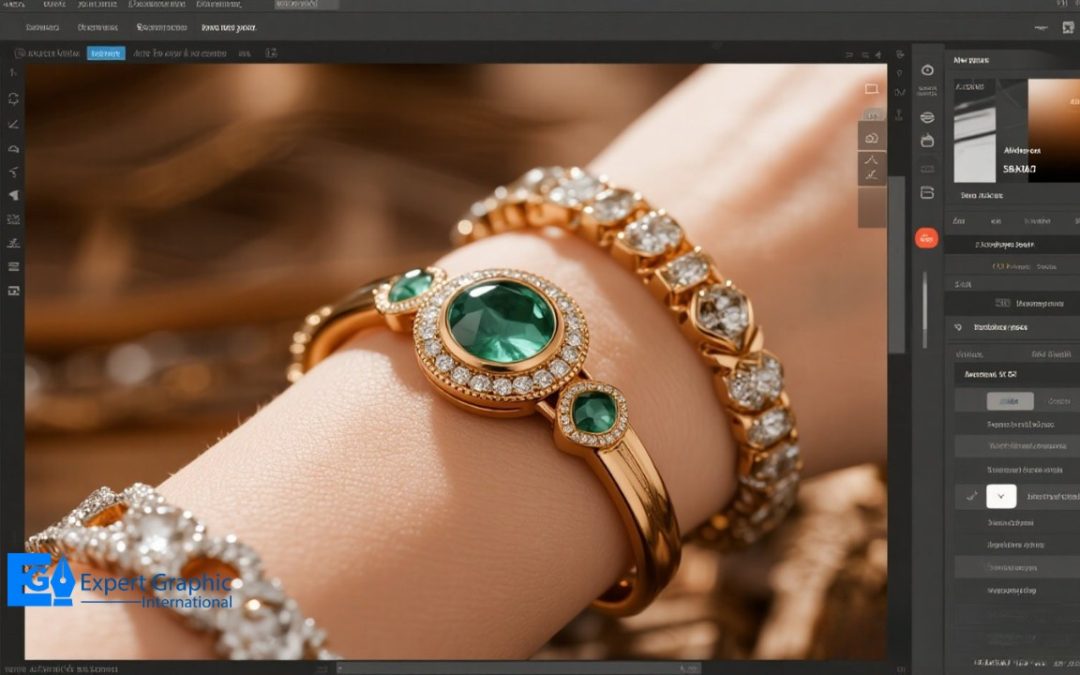
Why Is Jewelry Photo Retouching Important For Businesses?
Jewelry photo retouching is a Photoshop-based editing process that makes product images look clean, sharp, and premium while keeping the jewelry true to life. It includes background removal, dust and scratch cleanup, color correction, reflection fixes, metal polishing, natural shadows, and sparkle enhancement. Raw jewelry photos often show glare, dull lighting, soft focus, uneven white balance, and tiny flaws your eyes ignore in person, so the real shine and detail get lost online. Retouching boosts e-commerce results by improving clarity, consistency, and trust, which helps shoppers feel confident and can lower returns. Pros use methods like clipping paths, frequency separation, dodge and burn, color balancing, targeted sharpening, and controlled vibrance to upgrade images without distortion. Standard edits handle quick catalog cleanup, while high-end retouching targets micro-details for luxury ads. Brands also prep different outputs for marketplaces, social media, and 360° views, using the right formats (JPEG/PNG/TIFF) and frame-to-frame consistency. Want your jewelry to sell like it looks in real life? Make every pixel earn the price tag.
What is jewelry photo retouching, and what does it include?
Jewelry photo retouching is a professional process that enhances product images using software like Adobe Photoshop. It removes flaws and highlights the brilliance of metals and gemstones. The process ensures jewelry looks flawless, realistic, and luxurious. It increases consumer trust and sales. Jewelry photo retouching makes jewelry appear clean, sharp, and appealing online without altering its real-life appearance.
Jewelry photo retouching includes several specific processes:
- Background removal
- Cleaning dust and scratches
- Color correction
- Fixing reflections
- Polishing metal
- Adding natural shadows
- Enhancing diamond and gemstone sparkle
Why do raw jewelry photos often fail to represent the product accurately?
Raw jewelry photos fail to represent the product accurately because they capture technical imperfections like harsh reflections, dust, and color inaccuracies, and often exhibit dullness, improper lighting, poor focus, inconsistent white balance, and shadows that dull gemstone brilliance. The human eye typically overlooks these imperfections. Without post-processing, images demonstrate dullness, improper lighting, and poor focus. This obscures the jewelry’s true sparkle, color, and intricate details. Other performance issues include inconsistent white balance between listings, shadows that dull gemstone brilliance, a lack of macro clarity when zoomed, and slight variations in background tone.
How does jewelry retouching improve e-commerce performance and conversions?
Jewelry retouching improves e-commerce performance and conversions by transforming raw, imperfect photos into high-end, sparkling images that increase consumer trust and engagement, enhance product details, and reduce product returns. Jewelry retouching transforms raw, imperfect photos into high-end, sparkling images. It fixes lighting, corrects color, and removes distractions like dust or smudges. This process builds immense customer trust and establishes brand credibility for luxury and fine jewelry items. Flawless imagery communicates professionalism and reliability, which leads to higher confidence in making a purchase. It showcases intricate product details with incredible clarity and precision. Superior images significantly reduce product return rates because customers know exactly what they purchase. Professional jewelry photo retouching raises conversion rates by up to 30-40% compared to marketing campaigns alone.
How does retouching build trust and reduce returns for jewelry businesses?
Retouching builds trust and reduces returns for jewelry businesses by providing accurate, high-definition, and consistent imagery that aligns customer expectations with the physical product. Retouching eliminates uncertainty about product quality. It ensures the digital image matches the actual item. Professional editing showcases intricate details, corrects color, and highlights brilliance. This process boosts buyer confidence and improves customer engagement. The accurate visual representation directly reduces product returns, as customer expectations align with the physical product reality.
Which retouching techniques make jewelry images look premium without distortion?
Jewelry image retouching uses clipping paths, frequency separation, dodge and burn, color balance adjustment, targeted sharpening, natural shadow addition, cloning/healing brushes, and vibrance adjustments to make images look premium without distortion. The retouching techniques that make jewelry images look premium without distortion are outlined below.
- Clipping Paths: Clipping paths remove backgrounds cleanly.
- Frequency Separation: Frequency separation cleans surfaces, retains texture, sharpens intricate engravings, and preserves delicate textures without overexposing highlights.
- Dodge and Burn: Dodge and burn enhances highlights on metals and stones.
- Color Balance Adjustment: Color balance adjustment creates true-to-life tones.
- Targeted Sharpening: Targeted sharpening sharpens facets and fine-tunes global sharpness using Unsharp Mask at 20-30% opacity, which makes facets pop without gritty edges.
- Natural Shadow Addition: Natural shadow addition creates depth.
- Cloning and Healing Brushes: Cloning and healing brushes tackle stray reflections and uneven shadows.
- Vibrance Adjustments: Vibrance adjustments subtly amplify gemstone saturation without distorting hues.
- 100% Zoom Review: A 100% zoom review catches dust or color spills.
What is the difference between standard retouching and high-end jewelry retouching services?
The difference between standard retouching services and high-end jewelry retouching services is that standard services address basic cleanup and adjustments for e-commerce, while high-end services apply advanced, intricate techniques for detailed artistic enhancement suitable for luxury advertising. Standard jewelry retouching focuses on minor improvements. It removes dust, scratches, and fingerprints. It adjusts lighting, brightness, contrast, and color balance. This process suits standard e-commerce and catalog purposes. High-end jewelry retouching represents a meticulous, artistic process. It involves advanced techniques, including frequency separation, metal polishing, gemstone enhancement, and complex reflection control. This service boosts brilliance and texture, maintaining realism. It precisely manages micro-details such as prong edges, gemstone facets, and light reflections. The outcome is luxurious, flawless, and highly detailed images, suitable for luxury campaigns and high-quality advertisements.
How do businesses prepare images for marketplaces, social media, and 360° product views?
Businesses prepare images for marketplaces, social media, and 360° product views using specific processes, equipment, and content strategies for each platform. Businesses ensure high-resolution, consistent lighting, and clean, standardized white backgrounds for marketplace images. This approach meets strict marketplace requirements. Social media images feature lifestyle-oriented, engaging, varied, and less-rigidly-formatted visuals. For 360° product views, businesses utilize specialized turntables, high-resolution cameras, and software. They capture multiple product angles and then stitch these images together. The process requires careful lighting and products without details like dust or creases. An ideal 360° effect includes at least 36 product photos from different angles, while optimal quality requires more than 60 photos. Businesses produce 360° content in-house with suitable studio equipment or hire a product photography studio. The key prioritization areas for 360° product content include: Image Quality, Budget, Product viewing technology, Workflow The stages of the 360° product content workflow are outlined below: Product-in (receiving, verifying, sorting), Product prep (styling, setting the scene), Image capture, Post-production (editing, retouching), Quality control, Content delivery (file naming, publishing) Product return.
What is included in Jewelry Photo Retouching Services?
Services include dust and scratch removal, color correction, metal smoothing, shine and reflection enhancement, background removal, shadow balancing, and consistent cropping for catalog uniformity.
Does jewelry retouching improve sales in e-commerce?
Retouching improves product clarity and consistency, which strengthens buyer confidence during zoom inspection and supports higher-quality listings across websites and marketplaces.
How does retouching reduce jewelry returns?
Retouching reduces returns by improving color accuracy and realistic presentation so customers receive a product that matches the listing image in tone, texture, and finish.
What is the difference between a basic edit and High-End Jewelry Retouching Services?
Basic edits standardize catalog images quickly. High-end services refine reflections, textures, and micro-details for luxury campaigns and premium advertising visuals.
What file formats work best for e-commerce jewelry photos?
JPEG in sRGB is common for web speed and compatibility. PNG supports transparent backgrounds for design use. TIFF supports high-resolution archival and print workflows.
How do you enhance sparkle without making the image look unrealistic?
Professional Jewelry Image Editing enhances sparkle by shaping highlights and contrast while preserving the stone’s natural facet behavior and original color.
Do 360° jewelry photos require special editing?
Yes. 360 editing aligns exposure, color, crop, and shadows across all frames so the rotation remains stable and visually consistent.