
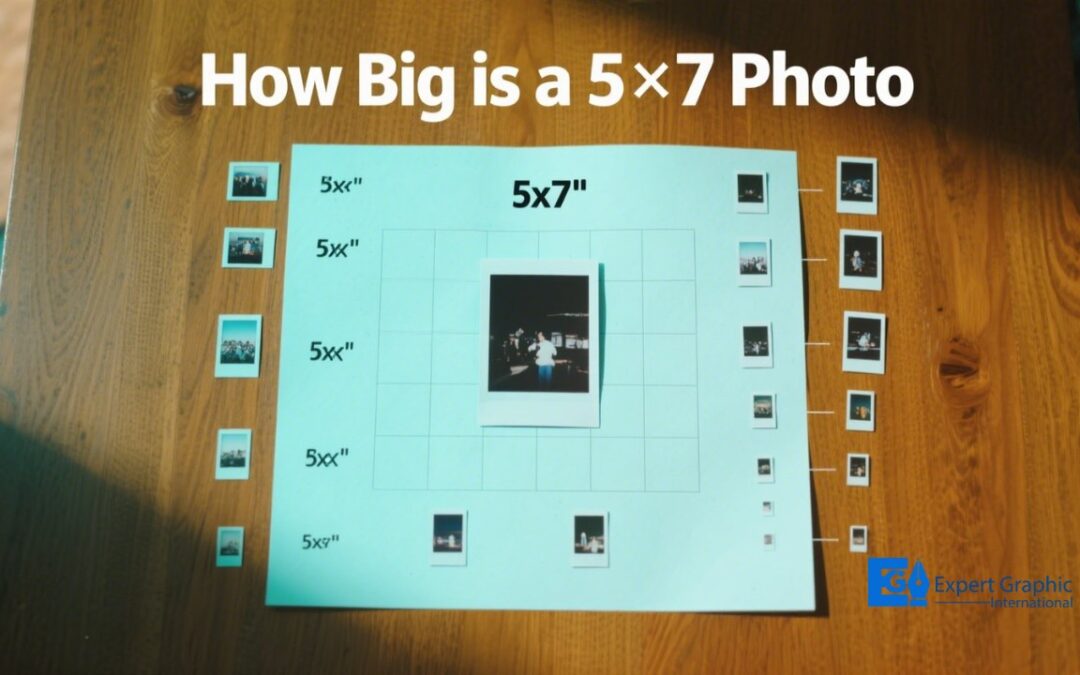
When it comes to choosing the perfect photo size for albums, frames, or gifts, the 5×7 photo stands out as a versatile and popular option. It strikes the perfect balance between offering enough space to capture details while remaining compact and easy to display. But how big is a 5×7 photo really? What makes it so popular? And how does it compare to other photo sizes? This guide dives deep into everything you need to know.
Understanding the Basics of the 5×7 Photo Size and What does 5×7 mean?
The 5×7 photo size refers to a photo that measures 5 inches wide by 7 inches tall, with a 5:7 aspect ratio, commonly used for portrait photography, albums, and frames due to its ideal balance between size and detail.
The 5×7 size is popular because it provides enough space for capturing clear details without overwhelming the space it’s displayed in. It’s often compared to everyday objects like an index card or a larger smartphone, helping people visualize its manageable yet visible size.
The 5×7 aspect ratio of 5:7 ensures that the photo fits neatly into frames and retains its composition without needing to crop out important parts. It’s a versatile size that works well in both portrait and landscape orientations.
In terms of its practical use, the 5×7 photo size is ideal for family portraits, graduation photos, and event photography. It provides enough room to focus on subjects like facial expressions while still being compact enough for easy display.
If you prefer working with metric measurements, the 5×7 size converts to 12.7 cm x 17.8 cm. This helps when comparing photo sizes across different systems of measurement, making it universally adaptable.
How Big is a 5×7 Photo? (Size in Inches, CM, and Other Units)
A 5×7 photo is 5 inches wide × 7 inches tall (portrait) or flipped for landscape. In centimeters, it’s 12.7 cm × 17.8 cm, and in millimeters, 127 mm × 178 mm. This compact size fits most frames and albums easily.
Perspective 1: Size in Inches
In inches, the photo is always 5 units by 7 units. If it’s vertical (portrait), the shorter side (5″) is the width, and the taller side (7″) is the height. Flip those for a horizontal (landscape) shot. This inch size is super common for prints in the U.S.
Perspective 2: Size in CM and MM
Metric units give you 12.7 cm × 17.8 cm or 127 mm × 178 mm. That’s because 1 inch equals 2.54 cm. These sizes are standard worldwide—Japan’s “2L” photo is identical at 127 × 178 mm.
Perspective 3: Size in Other Units
In feet, it’s about 0.42 ft × 0.58 ft (since 12 inches = 1 foot). In meters, it’s roughly 0.13 m × 0.18 m. These larger units aren’t practical for photos but help in real-world sense—like knowing it’s slightly bigger than a paperback book.
Why Size Matters
This 5×7 shape is a sweet spot: big enough to see details but small enough to fit on desks or in wallets. Whether you’re framing memories or making cards, it’s a trusted pick. Got a favorite moment? This size will do it justice.
What Aspect Ratio Does a 5×7 Photo Have?
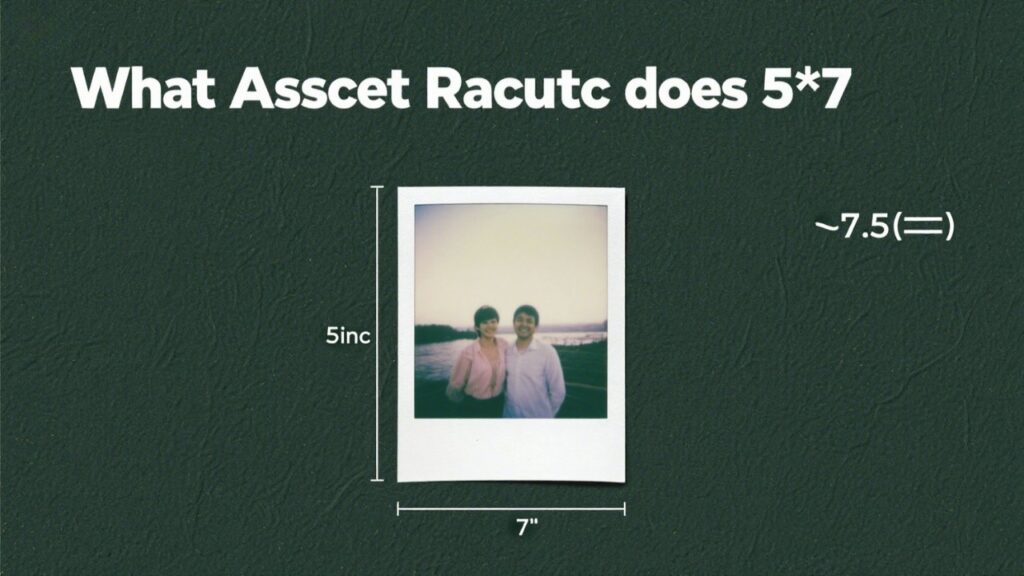
A 5×7 photo possesses an aspect ratio of 5:7. This ratio defines the relationship between its width (5 inches) and height (7 inches). The identical ratio can also be written as 7:5 if you flip the photo’s orientation.
Understanding the ratio itself:
The aspect ratio 5:7 means for every 5 units of width, the photo has 7 units of height. This ratio can be simplified mathematically to 1:1.4, but photographers and printers almost always use the whole numbers 5:7 or 7:5 to describe it clearly. The order (5:7 or 7:5) just depends on whether you hold the photo vertically or horizontally.
How this ratio affects printing:
Because the 5:7 aspect ratio isn’t as common as others (like 4×6’s 4:5 ratio), printing a 5×7 photo usually requires more cropping of your original image. Printers need to cut off parts of your picture to fit this specific 5-inch by 7-inch shape. This cropping can change how your final photo looks compared to what you shot.
Comparing 5×7 to other photo sizes:
The 5×7 size has a taller, narrower shape than a standard 4×6 print (which uses a 4:5 ratio). While a 5×7 is bigger than a 4×6 or an index card, it’s smaller than popular sizes like 8×10 (which uses a 4:5 ratio). In centimeters, a 5×7 equals 13×18 cm.
Orientation note (portrait vs. landscape):
A “5×7 photo” and a “7×5 photo” are the exact same size and aspect ratio. The labels just tell you the orientation:
5×7 = 5 inches wide × 7 inches tall (portrait)
7×5 = 7 inches wide × 5 inches tall (landscape)
So whether you call it 5:7 or 7:5, it’s the same shape—just turn it sideways!
What Size is a 5×7 Photo in Pixels?
A 5×7 photo is 1500 pixels wide and 2100 pixels tall when printed at 300 DPI (dots per inch). This resolution is commonly used for quality photo prints. These pixel dimensions come directly from multiplying the inches by the DPI.
The Core Calculation Explained:
The size in pixels depends directly on the resolution (DPI). For a 5×7 inch photo at 300 DPI (a standard high resolution for good prints), you multiply the width and height in inches by the DPI. So, 5 inches × 300 DPI = 1500 pixels for the width. Likewise, 7 inches × 300 DPI = 2100 pixels for the height. This gives you the total pixel dimensions: 1500 x 2100.
Why the Inches Matter First:
The “5×7” specifically refers to the physical size: 5 inches wide and 7 inches tall. You need to know this inch size and your chosen print resolution (like 300 DPI) before you can figure out the pixels. The pixel size isn’t fixed; it changes based on the resolution you pick for printing. Higher DPI means more pixels are packed into each inch.
The Role of Resolution (DPI):
The 300 DPI figure is key here. DPI means “dots per inch.” It tells you how many tiny dots of ink (or pixels) are printed within one inch of paper. Using 300 DPI is a common benchmark because it generally makes photos look sharp and clear to the human eye when held at a normal viewing distance. If you used a lower DPI, like 150, the same 5×7 inch print would only need 750 x 1050 pixels, but the print quality wouldn’t be as good.
Why Are 5×7 Photos So Popular?
5×7 photos are popular because they’re a versatile size, offering a balance between detail visibility and display impact. Their practical size fits standard frames easily, works great for photo albums and gifts, and shows more detail than smaller sizes like 4×6 while remaining affordable.
Versatility and Practicality:
This photo format is versatile. Its practical size and pleasant aesthetics suit many uses like photo albums, wall frames, gifts, invitations, and greeting cards. They fit well on desks, countertops, shelves, and mantels.
Superior Detail and Impact:
Compared to 4×6 photos, the 5×7 size provides a slightly bigger canvas. This allows it to showcase more detail or larger groups, making the image more impactful and visually appealing without overcrowding the space. It captures complex details well, even in black and white photography.
Ideal for Display and Gifting:
The size has a bigger presence in frames or albums. Its compatibility with standard frames makes it ideal for framing. Being gift-ready, it’s a nice gift size, aided by many 5×7 frames being available.
Balance and Affordability:
They strike a nice balance – noticeable without being overwhelming, with high-quality print of colors and details. While 4×6 photos are the most popular, 5×7s are a close second and are more affordable than larger sizes.
Professional and Personal Use:
Professionals appreciate the 5×7 photo format for its visual qualities and ease of use. It facilitates sharing and preserving memories, making it a favorite for both personal projects and professional projects.
What Are the Best Subjects for a 5×7 Photo?
Best Subjects:
Individual portraits, small family groups (waist-up or faces), ID photos, pets, babies/toddlers, small objects (jewelry, collectibles, food), nature/macro shots (flowers, insects), candid party pics, travel photos, and everyday snapshots (selfies, birthdays) work perfectly with this size.
Human Subjects Perspective:
The 5×7 photo is ideal for people pictures. You get great results framing individual portraits or small family groupings (2-3 people), especially close-ups focusing on faces or waist-up shots. It’s also the standard size for ID or passport photos. Pictures of newborns, babies, and toddlers look fantastic printed at 5×7. Even candid moments from parties or gatherings fit well when you don’t need super fine detail.
Objects & Nature Perspective:
Small items and nature details shine as 5×7 subjects. This includes product photos of jewelry, cameras, or collectibles, plus small food items or their ingredients. Macro shots capturing flowers, birds, insects, leaves, or small trees work beautifully too. The size shows enough detail without overwhelming the viewer.
Everyday & Creative Use Perspective:
This size is perfect for your everyday life moments. Think birthday parties, silly selfies, or vacation adventures with friends and family. It’s large enough to see the fun details but small enough for albums or frames without dominating your wall. The 5×7 also fits perfectly into greeting cards and showcases travel photos in standard albums. Its extra height compared to 4×6 photos often creates a more balanced composition for portraits.
Why 5×7 Works:
Its dimensions offer a sweet spot – big enough for detail, small enough for albums and frames. The taller shape gives extra vertical space, ideal for portraits and subjects needing height. It captures life’s moments perfectly!
What Are the Common Uses of 5×7 Photos?
Framed Displays & Home Decor:
This size is perfect for framing and displaying around the home (like on desks or gallery walls). It fits standard frames (widely available), is large enough to showcase details, and offers variety in displays without taking up excessive space.
Photo Albums and Scrapbooking:
5×7 photos are ideal for albums and favored by scrapbook enthusiasts. They allow clear viewing, offer ample space for decorations and text/notes around the photo, and fit well on scrapbook pages.
Portraits:
This size is commonly used for portraits (individual and group). It makes the subject stand out, can fit more people without losing detail, and is easy to find frames for.
Gifts and Greeting Cards/Invitations:
5×7 photos make excellent, thoughtful gifts, especially when framed. They are substantial enough to be meaningful yet convenient for the recipient. They are also perfect for photo-based greeting cards, invitations, or announcements.
Event Photography and Souvenirs:
Event photographers frequently use 5×7 prints for occasions like weddings or birthdays to capture details and emotions. They are also often used in photo booths as larger keepsakes for guests.
Professional, Artistic, & Marketing Use:
Photographers and artists use 5×7 prints professionally to show their work, especially in smaller exhibition spaces or as part of a series. They are also used for small posters and by businesses as handouts at events or in promotional packets. Artists use them for smaller art prints.
Other Uses:
This size works well in digital picture frames (like Aura Mason or Echo Show) and is suitable for educational projects or presentations because it’s large enough to be seen but easy for students to handle.
What Are the Benefits of Using 5×7 Photos?
Using 5×7 photos gives you benefits like a perfect balance between size and detail, versatile use for personal or professional needs, economical printing and framing, enhanced aesthetic appeal, and being ideal for gifting and sharing. They encourage selectivity and creativity.
Expanded Perspectives:
Size & Detail Balance: The 5×7 size offers a perfect balance. It’s big enough to show clear, detailed images and has a larger viewing area than 4×6, letting more detail pop, but isn’t too huge or hard to handle.
Versatile Use:
These photos are ideal for personal and professional use. They’re suitable for framing, scrapbooking, gifts, albums, and professional portfolios. They’re usable for most photography types, striking a good balance for sharing work or keepsakes.
Economical & Easy Framing:
Printing 5×7 photos is generally more economical than larger sizes. Finding frames, albums, and mats is easy and often cheaper because it’s a standard photo size. They fit perfectly into standard-sized frames.
Enhanced Visual Appeal:
The 5×7 size provides enhanced aesthetic appeal and visual impact. It works in landscape or portrait, looks more ‘finished’ and professional, especially in a series or gallery wall, and stands out on a desk, shelf, or mantel.
Ideal for Gifting & Sharing:
The size is perfect for gifting and sharing keepsakes. It’s large enough to be meaningful and feel much in hand, yet small enough to be convenient, thoughtful, and easy to mail in standard envelopes. It’s often preferred for special events.
Encourages Creativity & Selectivity:
The larger size encourages selectivity in choosing photos to print. Its dimensions are conducive to creative projects like scrapbooking or cards, allowing more creative composition and giving more room to play, especially for portraits or detailed shots.
What’s the Best Resolution for a 5×7 Photo?
The absolute best resolution for a sharp, clear 5×7 photo print is 1500 x 2100 pixels at 300 DPI (dots per inch). This high-resolution setting prevents pixilation, blurriness, and loss of detail in your printed picture.
Calculating the Pixels:
You get the 1500×2100 pixel size directly from the photo’s dimensions and the 300 DPI standard. Multiply the width (5 inches) by 300 DPI equals 1500 pixels. Multiply the height (7 inches) by 300 DPI equals 2100 pixels. This math gives you the ideal pixel count.
Quality Levels:
While 300 DPI (1500×2100 pixels) is best for high quality, you can get an average print at 200 DPI. That lower quality uses only 1000 x 1400 pixels. For a truly great photo, stick with the higher 300 DPI standard.
Camera Capability:
Don’t sweat your camera! Most modern smartphones, like iPhones with 12-megapixel cameras, easily capture enough pixels for an excellent 1500×2100, 5×7 print. You likely already have the gear you need.
General Rule:
Always use the highest resolution your camera offers for prints. Higher resolution means more detail and flexibility, helping you avoid fuzzy results. It’s your best bet for a perfect picture.
Is a 5×7 Photo the Same as a 7×5 Photo?
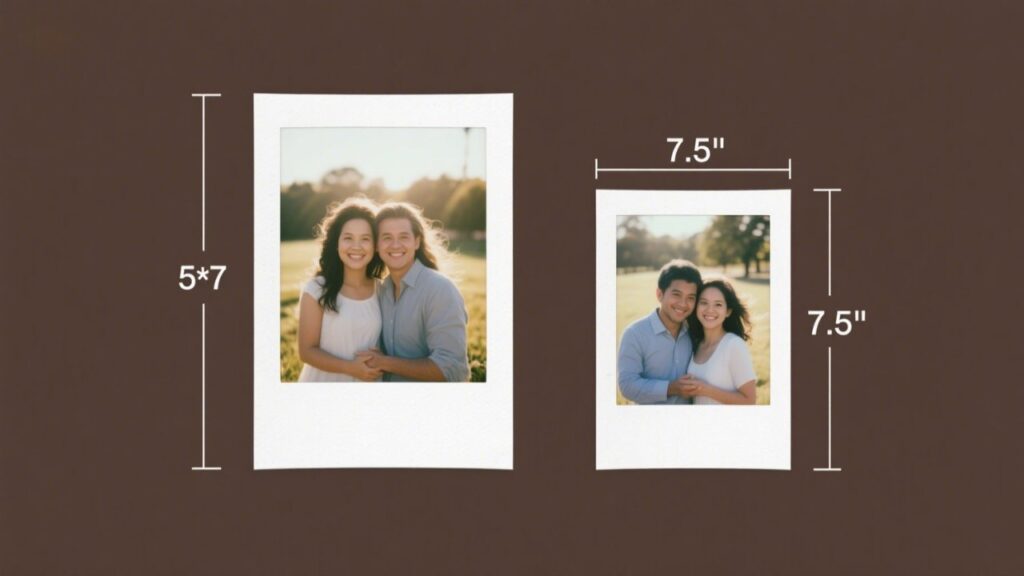
Yes, a 5×7 photo is the same physical size as a 7×5 photo. The dimensions are swapped: the 5×7 photo is 5 inches wide and 7 inches tall, while the 7×5 photo is 7 inches wide and 5 inches tall. Only the orientation is different.
Physical Size Equivalence:
The actual size of the paper is identical for both photos. Both prints measure exactly 5 inches on one side and 7 inches on the other side. This means their total area is the same. The difference arises solely from which way you hold or display the photo.
Dimension Specifications:
The dimensions are always listed as width × height. For a 5×7 photo, the width is 5 inches and the height is 7 inches. For a 7×5 photo, the width is 7 inches and the height is 5 inches. The numbers are simply reversed based on how the image is turned.
Orientation Difference:
The key difference is the orientation. A 5×7 photo is typically displayed in portrait orientation (taller than wide). A 7×5 photo is displayed in landscape orientation (wider than tall). This is purely about how you position the photo; the paper itself is unchanged.