
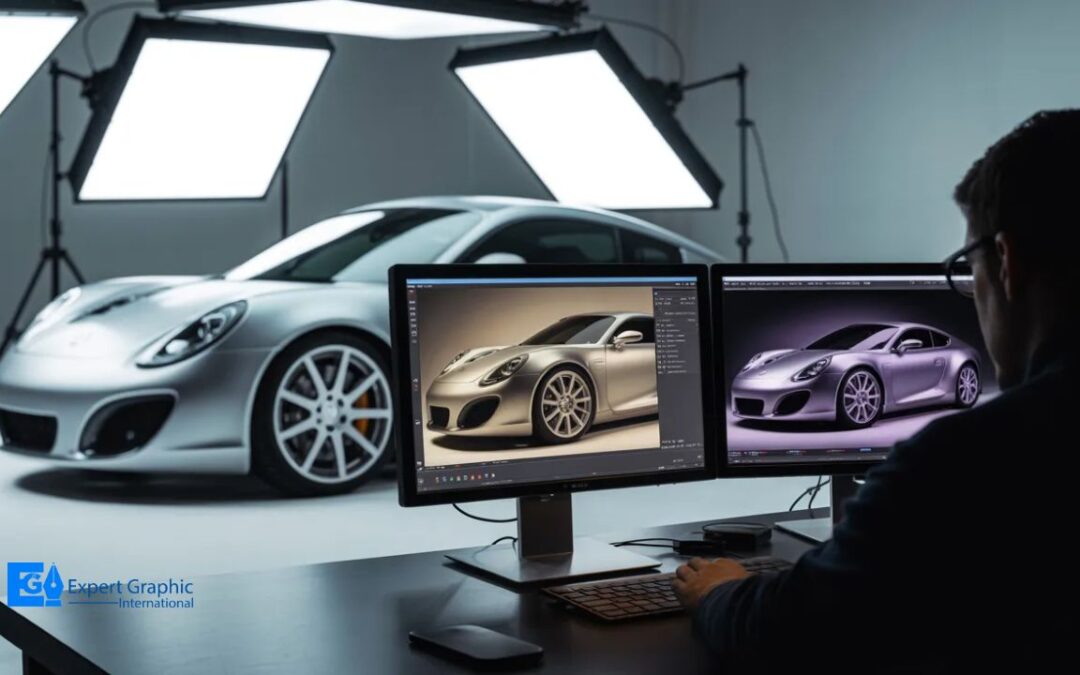
Automotive photo editing improves car images for ads, listings, catalogs, social media, and sales campaigns. It uses color correction, object removal, reflection cleanup, background replacement, and light adjustment to make vehicle photos look clean, sharp, and market-ready. The background matters because it shapes buyer perception, supports the car’s style, reduces distractions, and creates a polished visual story. Key edits include realistic backgrounds, accurate paint color, flaw retouching, lighting fixes, shadow control, and image alignment. These edits help dealerships and sellers build trust, increase engagement, show vehicle details clearly, and create a consistent brand look. Still, over-editing can mislead buyers, raise costs, slow workflows, and damage credibility. Strong car photography also depends on lighting, angles, reflections, composition, location, and careful post-production. For online sales, edited photos act like a digital showroom. Tools such as Photoshop, Lightroom, Capture One, Luminar, Snapseed, and Pixlr support this work. Sellers should edit honestly, keep RAW files for flexibility, and choose manual or AI editing based on quality, speed, and volume. Great car photos do not just look better; they help buyers feel ready to take the next step.
What is automotive photo editing?
Automotive photo editing is a specialized digital post-production process used to improve vehicle images for commercial, marketing, and visual presentation purposes. Car dealers, automotive photographers, and vehicle enthusiasts use this service to make car photos look cleaner, sharper, and more professional for advertisements, online listings, catalogs, social media, and promotional campaigns.
This editing process focuses on improving the overall appearance of new, used, luxury, and modified vehicles. Common refinements include removing distracting reflections, cleaning unwanted objects from the background, enhancing paint shine, adjusting lighting, and improving the overall visual balance of the image. When background changes are required, editors may also use clipping paths to separate the vehicle from its original surroundings and place it on a cleaner or more suitable background.
The 5 primary methods of automotive photo editing are:
- Color correction
- Object eradication
- Reflection enhancement
- Background replacement
- Light manipulation
Why does the background matter in car photography?
The background in car photography is a compositional component that determines visual perception, highlights vehicle design attributes, and establishes the narrative mood. The background functions as a stage that enhances the car’s silhouette, paint reflections, brand identity, and lifestyle positioning. A background complements the automobile if the environment remains clean or simple, with controlled lighting, balanced color contrast, and sufficient negative space around the vehicle. Background editing constitutes the process of eradication, substitution, or improvement of specific image regions for the acquisition of a polished outlook, including background removal, sky replacement, reflection cleanup, shadow refinement, and color grading. Poor backgrounds distract from the subject or break viewer immersion through clutter, inconsistent perspective, harsh reflections, unwanted objects, or mismatched environmental context. The functions of a background in car photography are outlined below.
- Determination of viewer perception.
- Enhancement of design aesthetics.
- Mitigation of visual distractions.
- Establishment of professional narrative.
- Improvement of image polish.
- Support of brand positioning and vehicle personality.
- Creation of lifestyle context for luxury, sports, off-road, commercial, or urban vehicles.
- Control of contrast, depth, lighting harmony, and subject separation.
- Reinforcement of realism through shadows, reflections, perspective, and environmental consistency.
- Optimization of images for advertising, dealership listings, social media, and automotive portfolios.
What are the key enhancements in automotive photo editing?
Key enhancements in automotive photo editing are background replacement, precise color correction, high-end retouching, and lighting optimization. Automotive photo editing is a digital image processing category that transforms raw vehicle photographs into showroom-quality marketing assets for dealerships, automotive brands, online car marketplaces, auction listings, social media campaigns, and commercial advertisements. Editors use AI-integrated software tools such as Adobe Photoshop, Luminar Neo, and Lightroom to expedite editing workflows. AI technologies like Firefly accelerate the modification process through generative fill, object removal, background extension, and automated masking. Background replacement eliminates distracting environments to focus the viewer on the vehicle while maintaining realistic shadows, reflections, perspective, and ground contact. Precise color correction restores authentic paint tones and increases vibrancy by adjusting white balance, hue, saturation, contrast, and color consistency across image sets. High-end retouching removes surface blemishes and flaws such as dust, scratches, dents, glare, fingerprints, license plate distractions, and unwanted reflections. Lighting optimization balances exposure and shadows to create depth while improving highlight control, wheel visibility, interior clarity, and overall subject separation. The enhancements of automotive photo editing are outlined below.
- Background replacement
- Color correction
- Flaw retouching
- Lighting optimization
- Shadow and reflection refinement
- Perspective correction and image alignment
- Interior and exterior detail enhancement
- Object removal and distraction cleanup
- Image consistency for marketplace, dealership, and advertising use
Why is automotive photo editing so important?
Automotive photo editing is a digital post-production process that maximizes sales volume, establishes consumer trust, and enhances visual appeal across dealership websites, online car marketplaces, auction platforms, and automotive advertising campaigns. High-quality imagery captures audience attention by presenting vehicles with clean composition, accurate paint color, balanced exposure, and professional framing. Professional editing corrects lighting issues and removes distracting backgrounds while improving shadows, reflections, contrast, and image consistency across the full vehicle inventory. Visual clarity highlights specific details such as emblems and upholstery as well as dashboard features, wheel design, trim packages, infotainment systems, leather texture, and exterior condition. Consistent presentation converts leads into sales by reducing buyer uncertainty and creating a reliable visual standard for every listing. Polished photography provides a competitive advantage for dealerships because professional vehicle images make listings appear more trustworthy, premium, and ready for purchase. Consumer interest correlates with image quality since clear, detailed, and realistic photos help buyers evaluate vehicle condition before scheduling a test drive or inquiry. High-quality images accelerate vehicle turnover in competitive markets by improving click-through rates, engagement, listing performance, and buyer confidence.
What are the benefits of automotive photo editing?
The 6 benefits of automotive photo editing, a digital post-production process, are sales acceleration, brand professionalism, engagement growth, return reduction, visual consistency, and detail accuracy. This technique corrects lighting inaccuracies and removes background distractions while improving exposure balance, shadow realism, reflection control, color accuracy, and subject separation. High-quality vehicle imagery attracts potential buyers if automotive dealerships utilize e-commerce platforms such as dealership websites, online car marketplaces, auction portals, inventory management systems, and social media advertising channels. Automotive photo editing strengthens buyer confidence by presenting the vehicle’s paint condition, interior materials, wheel design, trim level, mileage-related wear, and exterior imperfections with greater clarity. Consistent edited images also help dealerships create uniform inventory presentation, improve click-through rates, increase lead submissions, reduce misinterpretation, and support faster purchase decisions. The benefits of automotive photo editing are outlined below.
- Sales acceleration
- Brand professionalism
- Engagement growth
- Return reduction
- Visual consistency
- Detail accuracy
What are the drawbacks of automotive photo editing?
The drawbacks of automotive photo editing are Unrealistic Representations, Financial Expenses, Labor Intensity, and Legal Risks. Automotive photo editing is a digital manipulation process that alters vehicle imagery for commercial use across dealership websites, online car marketplaces, vehicle auction platforms, inventory listings, and automotive advertising campaigns. When editing is excessive, inaccurate, or inconsistent, it can mislead buyers, increase production costs, slow publishing workflows, and create compliance risks for sellers. The drawbacks of automotive photo editing are outlined below.
- Unrealistic Representations: Excessive retouching ruins natural vehicle beauty if editors apply improper techniques such as over-enhancing paint gloss, changing original paint color, removing visible scratches, hiding dents, concealing rust, or making a used vehicle appear newer than its actual condition.
- Financial Expenses: Specialized software subscriptions and professional outsourcing fees increase operational overhead through AI editing tools, Adobe Photoshop, Lightroom, retouching teams, quality-control checks, revision cycles, and bulk inventory editing workflows.
- Labor Intensity: Manual correction of complex reflections and lighting environments requires substantial time because reflective paint, chrome trim, glass surfaces, wheel details, shadows, interior textures, and curved body panels require precise editing.
- Legal Risks: Inaccurate digital depictions create liability issues for vehicle condition when edited images misrepresent accident damage, hide mileage-related wear, obscure cosmetic defects, or conflict with consumer protection and marketplace disclosure standards.
- Buyer Distrust: Over-edited automotive images can reduce customer confidence when the actual vehicle does not match the online listing photos.
- Brand Reputation Damage: Misleading vehicle imagery can harm dealership credibility through complaints, negative reviews, reduced repeat business, and lower customer loyalty.
- Workflow Delays: Large vehicle inventories can create bottlenecks when every image requires background cleanup, reflection correction, approval review, and consistent formatting.
How can you elevate your automotive photography?
Automotive photography is a specialized visual art where elevation requires specialized light control, reflection management, and technical angle selection. Automotive photography elevation improves vehicle presence, visual drama, design emphasis, and commercial appeal by using controlled composition, professional lighting, and intentional shooting perspectives. The techniques of automotive photography elevation are outlined below.
- Light control defines the vehicle’s painted finish and overall form. Use strobe or natural light sources to emphasize vehicle contours while minimizing harsh glare on the metallic bodywork through softboxes, diffusers, polarizing filters, rim lighting, golden-hour lighting, and balanced exposure settings.
- Reflection management highlights the car’s aerodynamic lines and glossy exterior. Position the vehicle relative to the surroundings to prevent unwanted environmental clutter from appearing in the final photograph while controlling reflections from glass, chrome trim, polished paint, windows, buildings, trees, and sky surfaces.
- Angle selection creates cinematic visual narratives and emphasizes a vehicle’s aggressive stance. Lower the camera height to provide a unique perspective distinct from standard eye-level automotive portraits by using low-angle shots, three-quarter front views, rear-quarter views, wheel-focused compositions, wide-angle lenses, and leading lines.
- Composition control improves automotive image elevation by using negative space, symmetry, foreground framing, background separation, and rule-of-thirds placement to guide viewer attention toward the vehicle.
- Location selection strengthens the narrative mood by matching the car with urban streets, mountain roads, studio settings, luxury architecture, racetracks, or off-road environments.
- Post-production refinement enhances the final image through color grading, contrast adjustment, shadow recovery, highlight control, blemish removal, and background cleanup.
Does automotive photo editing matter for online car sales?
Yes, automotive photo editing matters significantly for online car sales because it establishes the primary digital showroom and shapes consumer trust. Automotive photo editing is a digital asset optimization process that enhances vehicle presentation for electronic commerce platforms. Professionally edited photos increase listing views by 47%. High-quality visual enhancements generate 62% more inquiries. Clean, consistent, and well-lit images accelerate sales speed by 32%. Prospective buyers make split-second judgments based strictly on imagery quality. Engagement levels rise if image quality remains high.
What tools are used for automotive photo editing?
Tools used for automotive photo editing are Adobe Photoshop, Adobe Lightroom, Capture One, Luminar, Snapseed, and Pixlr. Automotive photo editing tools are software applications that facilitate vehicle image optimization through RAW processing and pixel-level manipulation. The software tools for automotive photo editing are outlined below.
- Adobe Photoshop executes precise retouching, background swaps, and chrome retouching.
- Adobe Lightroom manages batch color grading and non-destructive workflows.
- Capture One performs global RAW processing for professional photographers.
- Luminar applies artificial intelligence enhancements to automotive images.
- Snapseed provides mobile editing capabilities for rapid adjustments.
How should you handle automotive photo editing for different types of sellers?
Automotive photo editing is a digital post-production process that aligns visual enhancement strategies with the scale, budget, and audience goals of the seller. This process adapts technical adjustments to specific market requirements. The strategies for specific seller categories are outlined below.
- Dealerships utilize high-volume background replacements and consistent branding.
- Private sellers prioritize enhanced, honest imagery to highlight vehicle cleanliness.
- Agencies implement customized techniques to meet specific campaign goals.
The core technical adjustments for all sellers are outlined below.
- Exposure correction.
- Glare removal.
- Edge sharpening.
Editors exclude damage removal from the workflow if the goal is ethical representation.
Do edited car images influence buyer psychology?
Yes, edited car images influence buyer psychology through increased trust, perceived value, and engagement. Car image editing is a marketing process that dictates consumer perception in the automotive industry. Professional visual adjustments result in 47% more user clicks. Quality photos decrease the time to sale by 5 to 10 days. Online searches constitute the primary entry point for 90% of vehicle buyers. Digital showrooms facilitate split-second decision-making. The psychological effects of edited car images include the following points.
- Value perception enhancement.
- Emotional connection development.
- Risk perception reduction.
- Professionalism attribution.
The technical enhancements for car images are listed below.
- Lighting improvement.
- Background removal.
What are the differences between edited automotive photos and RAW photos?
The differences between edited automotive photos and RAW photos are the processing state, sensor data volume, and visual aesthetics. Automotive photography is a digital imaging discipline that utilizes RAW and edited file formats. RAW photos are unprocessed digital negatives that contain maximum data from the camera sensor. These files exhibit flat color profiles and dull contrast. Edited automotive photos are final images with adjusted exposure and vibrant color palettes. These files consist of compressed data, such as JPEGs. Photographers use RAW files if the project requires maximum editing flexibility.
The primary distinctions between edited and RAW automotive images are outlined below.
- Data retention: RAW files preserve all sensor information, while edited files use compressed formats.
- Visual presentation: RAW files appear dull while edited images show vibrant colors.
- Distribution status: RAW files function as internal assets while edited images serve as public deliverables.
What is the difference between manual and AI automotive photo editing?
The difference between manual and AI automotive photo editing resides in the human-led creative control versus the algorithmic automation of processing speed and consistency. Manual automotive photo editing is a creative process that relies on human designers and software like Adobe Photoshop for deliberate pixel adjustments. This method provides superior control for high-end artistic shots. Manual editing remains time-consuming and results in potential inconsistency. AI automotive photo editing is an automated process that uses trained machine learning algorithms to execute complex tasks. This technology handles background removal, lighting, and color corrections in seconds. AI editing offers 90% faster processing than human methods. It ensures 98% consistency for high-volume dealer inventory. Human designers execute manual edits if projects require high-end artistic shots. The key characteristics of manual and AI automotive photo editing are outlined below.
- Human designers are the primary control source.
- Adobe Photoshop is the standard software tool.
- Deliberate pixel adjustments for artistic quality.
- Machine learning algorithms are the automation engine.
- High-speed processing for volume inventory.
- Uniform consistency across large datasets.